Burst and Frozen Pipe Repair in Grand Rapids: The Complete Guide
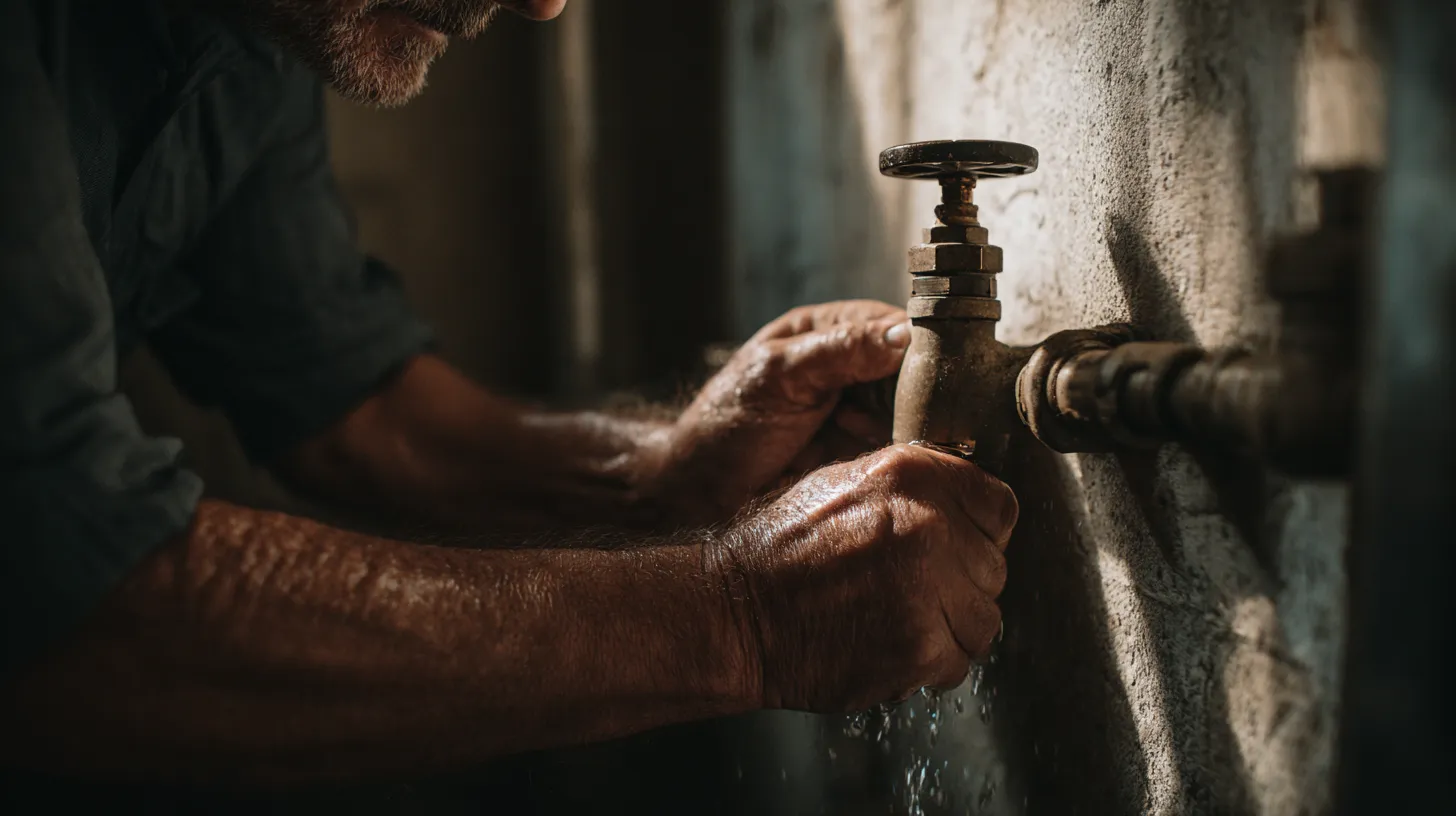
Burst and frozen pipe repair is the plumbing work that thaws an ice-blocked water line, finds the split the ice created and replaces the damaged section before full water pressure returns. It belongs to emergency plumbing and to winter water-supply repair. In Grand Rapids, Michigan, the work centers on five entities: the frozen pipe, the burst pipe, the water service line, the water meter and the main shutoff valve. Local rules decide who pays for each one, because the Grand Rapids Water System owns the meter while the property owner owns the line from the curb stop to the meter and every pipe inside. Burst and frozen pipe repair in the Grand Rapids area follows those rules, the region's housing age and its sub-zero cold snaps.
Freeze-Prone Pipe Locations in Grand Rapids Homes
Freeze-prone pipe locations are the places where a supply line sits outside the heated envelope of a building, and they decide where a frozen pipe repair starts. Five locations account for most freeze points:
- Kitchen sink supply on an exterior wall — the cold line runs inside an outside wall, often behind a closed base cabinet.
- Crawl space supply line — the pipe hangs in an unheated space exposed to outside air.
- Pipe above an unheated garage — a bathroom or laundry line runs through a garage ceiling.
- Rim joist and sill plate run — a laundry or hose-bib line travels along the sill above the foundation wall.
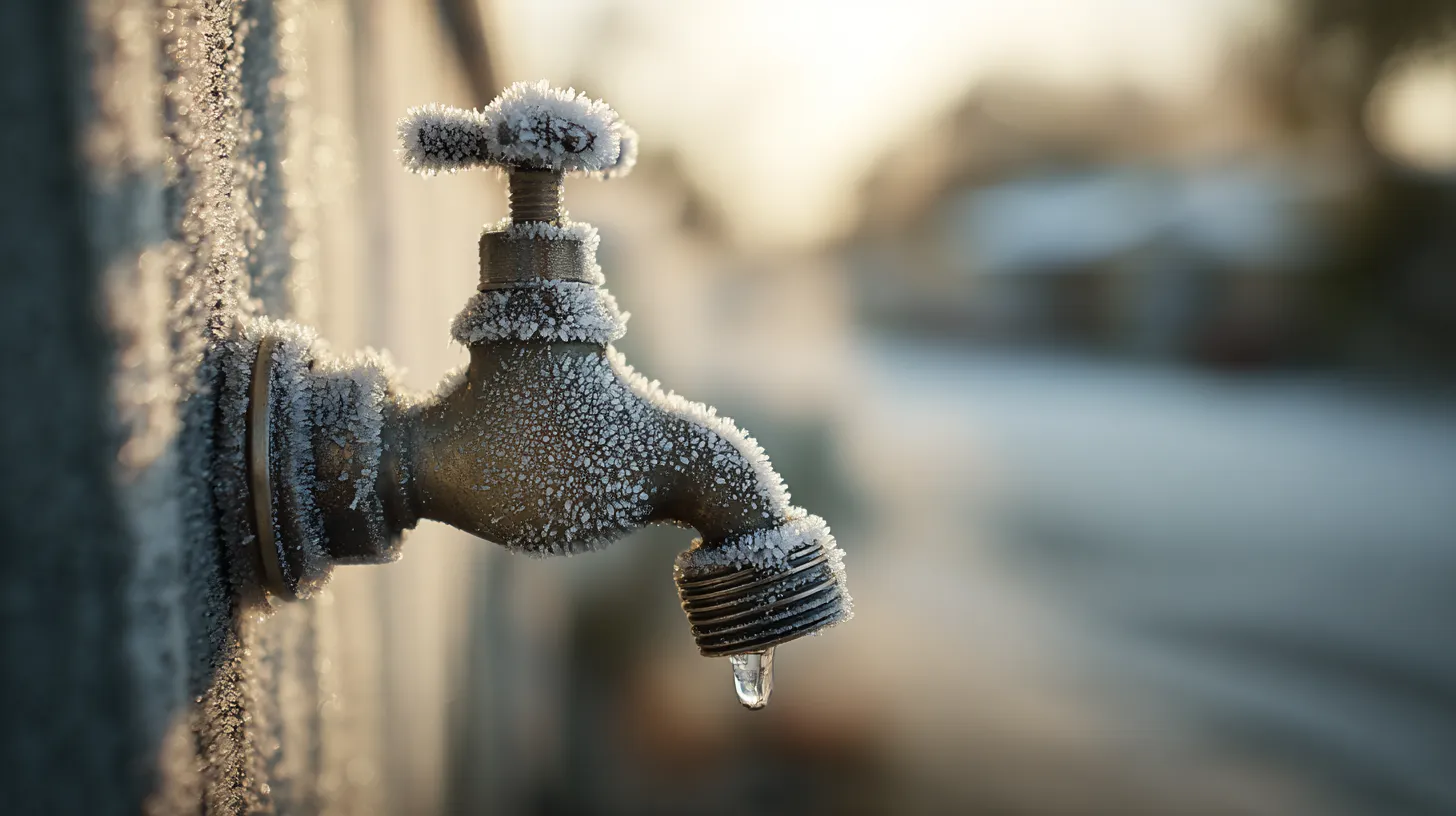
- Outdoor hose bib — a sillcock with a hose left attached traps water in the valve body.
Distance from heated space, wall insulation and wind exposure set the freeze risk of each run. Access sets the repair cost, since a pipe in an open basement ceiling thaws in place while a pipe inside a finished wall requires opening drywall.
Housing age adds a second layer. The U.S. Census Bureau's American Community Survey (2020–2024) puts 37.5% of Grand Rapids homes before 1940 and the city's median home at 1953; East Grand Rapids follows at 28.8% pre-1940. Pre-war homes carry galvanized steel supply pipe, uninsulated exterior walls and additions such as enclosed porches built over open crawl spaces. Newer suburbs freeze too: Kentwood's median home dates to 1983 and Walker's to 1984, and both carry kitchen sinks on exterior walls and bathrooms over attached garages.
Water Service and Meter Freeze Points
Water service and meter freeze points sit where city water enters the building, and ownership rules make them the costliest frozen pipe repair to misjudge. The Grand Rapids Water System Rules and Regulations (2026) split responsibility at the curb stop:
| Freeze point | Who maintains it | Who pays after a freeze |
|---|---|---|
| Water main to curb stop | Grand Rapids Water System | Water System |
| Curb stop (valve at the property line) | Water System; only its staff operate it | Water System |
| Curb stop to meter (water service line) | Property owner | Property owner |
| Water meter and couplings | Water System owns them | Property owner when the meter freezes |
| Inlet and outlet valves at the meter setting | Property owner | Property owner |
| All plumbing past the meter | Property owner | Property owner |
Sources: Grand Rapids Water System Rules and Regulations, 2026 (§7.6, §7.7, §10.5, Appendix II); City of Grand Rapids homeowner responsibility page.
The meter is the clearest example. The Water System owns every meter, but its rules list freezing among the forms of owner negligence and charge the damage to the property. The 2026 fee schedule sets a frozen meter replacement at $225 for a 3/4-inch meter and $315 for a 1-inch meter, plus a $75 meter set fee. Suspected meter damage goes to city Customer Service at 311 or (616) 456-3000.
Burial depth protects the service line itself. The rules require water services laid with five feet of cover, so a frozen service line usually points to a shallow section, a line exposed where it enters the basement or a meter in an unheated space. Properties with an accessory dwelling unit carry an extra rule: the primary residence keeps the meter in a secure, heated location. Outside meter pits, where the Water System requires one, sit on private property, and the owner pays for their construction and upkeep.
Pipe Materials and Failure Modes
Pipe materials decide how a frozen line fails and how a burst pipe gets repaired. Five materials appear in Grand Rapids buildings:
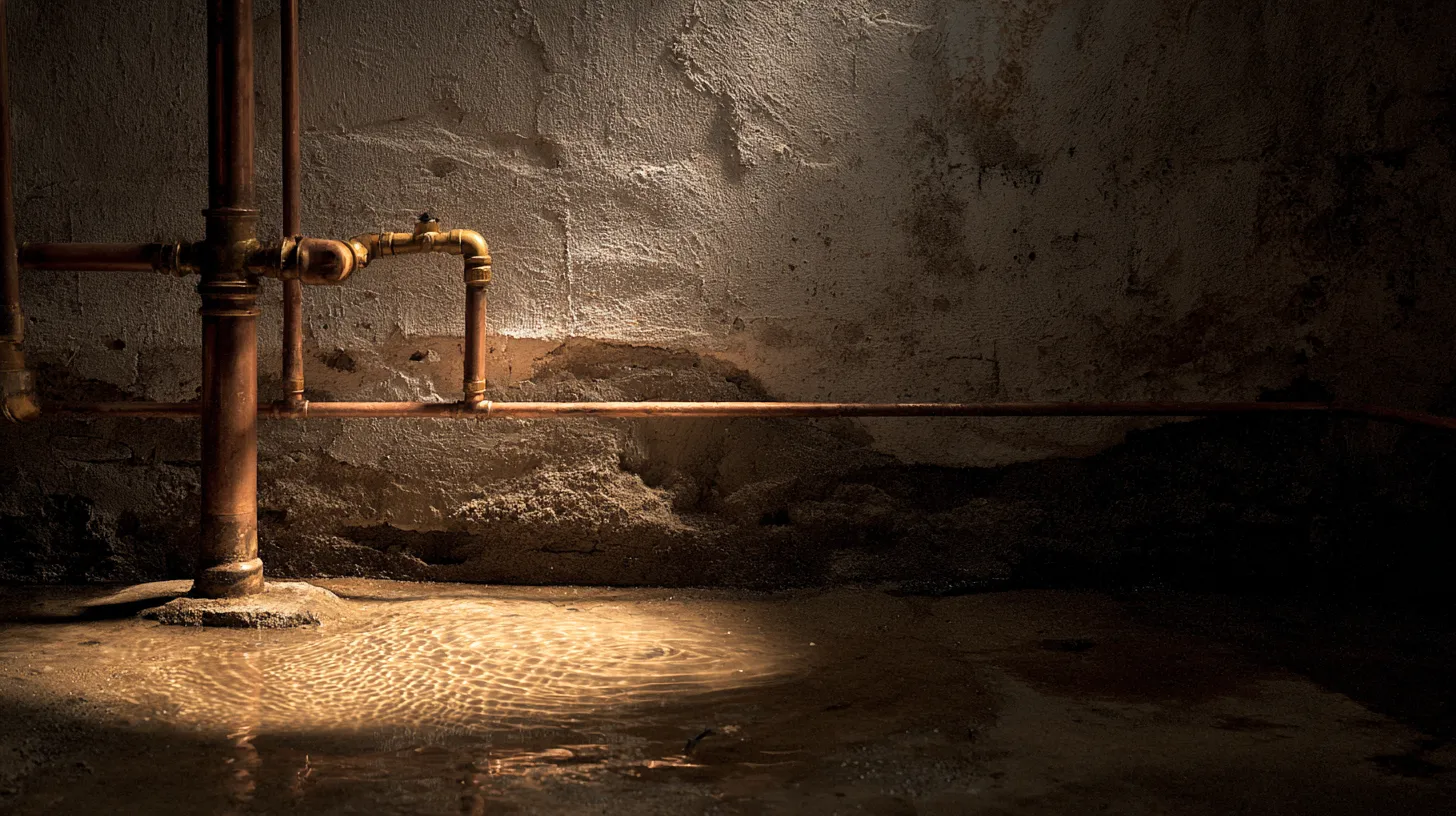
- Copper supply pipe — rigid Type L or Type M copper splits lengthwise under ice pressure; the split often hides behind insulation until the thaw.
- Type K copper water service — the heavy-wall copper Grand Rapids requires for services 2 inches or smaller in the public right-of-way.
- PEX supply line — flexible tubing expands under ice and resists splitting, but crimp and push-fit fittings remain weak points.
- Galvanized steel pipe — threaded joints in pre-war homes corrode from the inside and crack at the threads when ice forms.
- CPVC supply pipe — rigid plastic cracks rather than bulges and turns brittle in cold spaces.
Joint type matters as much as pipe type. Soldered copper joints, threaded galvanized joints and crimped PEX joints each leak differently after a freeze. Grand Rapids Water System rules also ban sweat (soldered) couplings on the water service up to and including the meter setting, so a service line repair uses compression or other approved fittings.
Commercial buildings add a sixth failure mode. Wet-pipe fire sprinkler branches in unheated stairwells, loading docks and attic spaces hold standing water, and a frozen sprinkler line discharges when it thaws. Grand Rapids rules require sprinkler connections protected against backflow, and owners of systems that contain antifreeze protect the potable supply with a reduced pressure principle backflow preventer.
Thawing and Repair Methods
Thawing and repair methods follow a fixed order: stop the water, thaw the ice, find the split and repair it before pressure returns. Closing the main shutoff valve next to the meter comes first; Grand Rapids requires a valve on each side of the meter for that purpose. Opening the faucet on the frozen line gives melting ice somewhere to go.
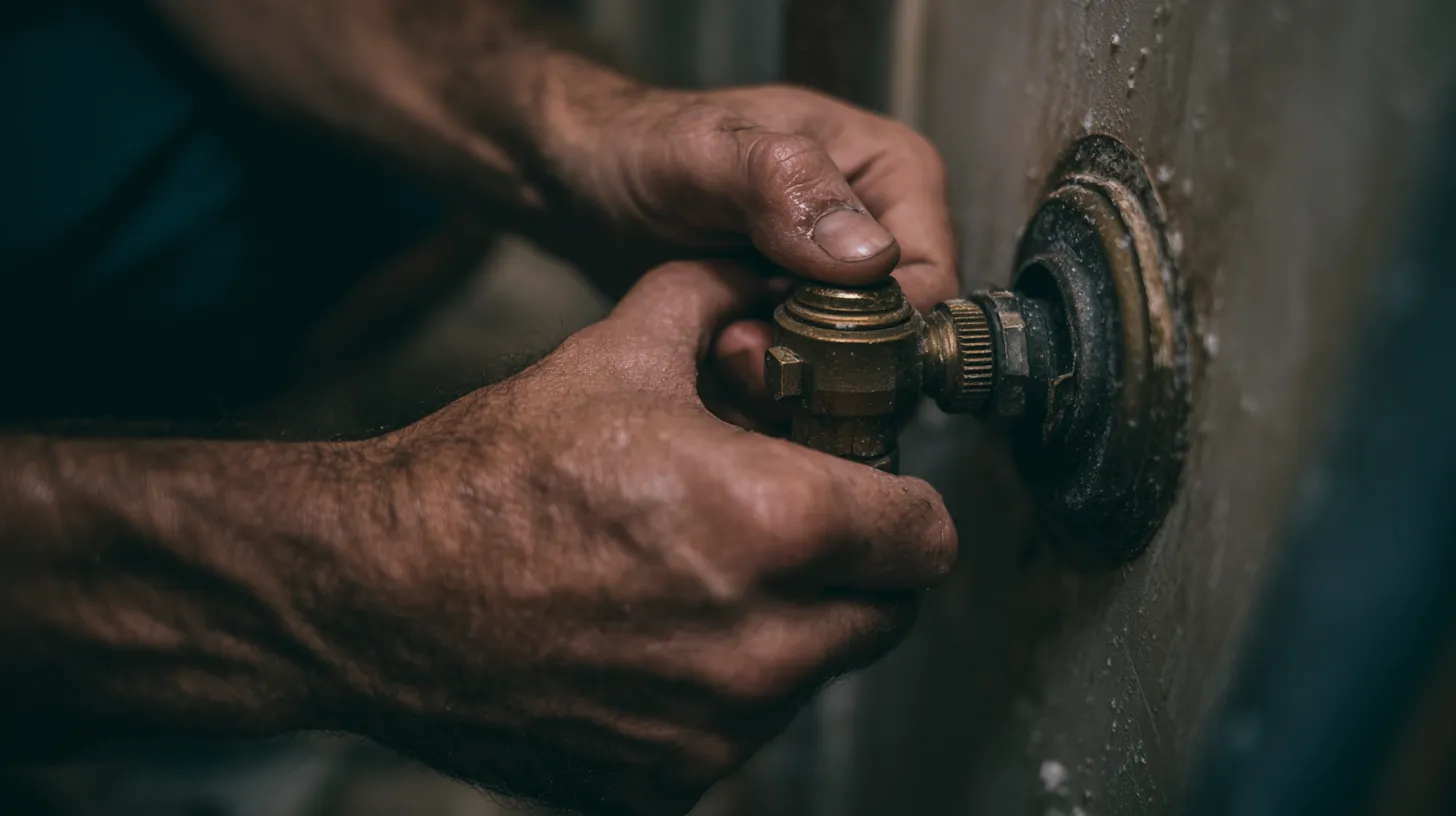
Controlled heat does the thawing. A hair dryer or heat gun on low, a space heater aimed at the open cavity or self-regulating heat cable warms the pipe from the faucet end back toward the ice. Open flames and torches stay out, because they melt solder, soften PEX and ignite framing.
The repair depends on the damage:
- Section replacement — the split length gets cut out and replaced with new copper or PEX.
- Repair coupling — a short split in an accessible run gets a crimp or push-fit coupling.
- Rerouting — a line that froze in an exterior wall moves to an interior wall or heated chase.
- Pressure test — the repaired branch holds pressure before the main valve reopens.
- Inspection — Grand Rapids tests and inspects every repaired water service before backfill, and the Development Center's plumbing permit covers work that requires one.
A 2026 Michigan cost guide lists these ranges:
| Job | Typical cost |
|---|---|
| Thaw a frozen pipe (no burst) | $200–$400 |
| Leak repair, accessible pipe | $175–$450 (average $275) |
| Leak repair, behind a wall or ceiling | $350–$900 (average $550) |
| Burst repair with water damage | $500–$3,000+ |
| Whole-house repipe, PEX | $4,000–$7,500 |
| Whole-house repipe, copper | $5,000–$9,000 |
| Winter emergency service call (Dec–Feb) | $300–$600 |
The same guide prices prevention at $50–$200 for foam pipe sleeves, $100–$300 for heat cable on exposed pipes, $500–$1,500 to insulate a crawl space or rim joist and $300–$600 for a smart water shutoff valve.
Grand Rapids Winter Rules and Authorities
Grand Rapids winter rules and authorities set the standards a burst pipe repair meets, from burial depth to who signs off on the work. Five sources govern the work:
- Grand Rapids Water System Rules and Regulations (2026) — service depth, materials, meter ownership, freeze charges and vacant-building duties.
- Michigan Administrative Code R 408.30522 — the 42-inch footing depth that marks the state's frost line for foundations, effective February 6, 2016.
- National Weather Service records for Grand Rapids — the cold history that explains why the rules exist.
- U.S. Census Bureau American Community Survey — the housing-age data behind the city's freeze-prone plumbing.
- Grand Rapids Development Center — the office that issues plumbing permits inside the city.
The Development Center's plumbing permit application states that permitted work stays uncovered and unused until inspected, and it limits owner-pulled permits to work in a home the owner occupies. The Water System adds its own inspection for any repaired service line. A lead service line found during a frozen line repair qualifies for the city's Lead Line Replacement Program, which replaces a leaking lead line at no cost to the owner.
Grand Rapids Water System Rules Lay Water Service Lines Under Five Feet of Cover
Grand Rapids lays water service lines with five feet of cover below the ground surface or an approved street grade, whichever is lower (Water System Rules and Regulations, 2026, §7.7). That depth sits below the 42 inches Michigan sets for exterior footings, so ground frost rarely reaches a correctly buried line. A service line that freezes in Grand Rapids usually freezes where it rises: at the foundation wall, in an unheated basement corner, inside a crawl space or at a meter pit. Repairs to that line follow the same rules, with Type K copper required in the public right-of-way and a Water System inspection before the trench closes.
Grand Rapids Charges the Property Owner When a Water Meter Freezes
A frozen water meter in Grand Rapids becomes the property owner's bill. The Water System owns the meter, but §10.5 of its 2026 rules lists freezing with vandalism, theft and tampering as owner negligence and charges the property for repair or replacement. Appendix II sets the frozen-meter replacement fee at $225 for a 3/4-inch meter, $315 for a 1-inch meter and $1,065 for a 1 1/2-inch meter, plus a $75 meter set fee. A meter in a heated basement corner, away from an exterior wall and drafts, avoids the charge.
Grand Rapids Leaves Draining a Vacant Building's Plumbing to the Owner
Grand Rapids does not drain plumbing in a vacant or shut-off building; the owner does. Sections 10.13 and 10.14 of the Water System rules state that draining the plumbing and the meter to prevent damage is not the Water System's responsibility. An owner leaving a property vacant for 30 days or more requests a water shutoff, and the city charges a $75 meter set fee when service returns. A closed valve alone leaves water in the pipes, the water heater, toilet tanks and traps, and that water freezes in an unheated house. Draining every line and fixture, or keeping heat on and the building checked, closes the gap.
Grand Rapids Recorded Its Coldest Temperature, -24°F, on February 13–14, 1899
Grand Rapids set its all-time low of -24°F on February 13–14, 1899, according to National Weather Service records compiled by WGRD. Recent winters still reach deep cold:
| Date | Low | Note |
|---|---|---|
| February 13–14, 1899 | -24°F | All-time record |
| January 30, 1951 | -22°F | Second coldest |
| January 19, 1994 | -22°F | High of -2°F that day |
| February 3–4, 1996 | -17°F | Two-day cold snap |
| January 14, 2015 | -13°F | Coldest since 1996 at Ford International Airport |
| December 27, 2017 | -12°F | Broke the date record of -5°F set in 1993 |
Sources: National Weather Service data via WGRD; FOX 17 (2015, 2017).
Each of these nights pushes cold air into exterior walls, garages and crawl spaces, and the burst pipe calls arrive with the thaw that follows.
Michigan Requires Exterior Footings to Reach 42 Inches Below Grade
Michigan Administrative Code R 408.30522 requires exterior footings and foundation systems to extend 42 inches below actual grade, effective February 6, 2016. The rule lets a building official adjust that depth for freezing degree days, soil type, groundwater, snow depth and exposure. The 42-inch figure marks how deep Michigan expects frost to reach, and it explains the five-foot cover Grand Rapids sets for water services. Pipes above that line, in a slab edge, a shallow crawl space or an uninsulated rim joist, sit inside the frost zone.
Frequently Asked Questions
How Does A Frozen Pipe Burst?
A frozen pipe bursts from pressure, not from the ice itself. Ice forms at the coldest point and traps water between the blockage and a closed faucet. As more water freezes, pressure in that trapped section rises until the pipe wall splits, and the split leaks once the ice melts.
How Is A Frozen Pipe Thawed Safely?
A frozen pipe thaws safely with the main shutoff closed, the faucet open and gentle heat applied from the faucet end toward the ice. A hair dryer, heat gun on low or heat cable supplies that heat. Torches and open flames stay out, and the thawed section gets checked for splits before pressure returns.
Who Pays For A Frozen Water Meter In Grand Rapids?
The property owner pays for a frozen water meter in Grand Rapids. The Water System's 2026 rules treat freezing as owner negligence. Replacement costs $225 for a 3/4-inch meter or $315 for a 1-inch meter, plus a $75 meter set fee.
Does Homeowners Insurance Cover Frozen And Burst Pipes?
Homeowners insurance coverage for frozen pipes depends on the policy wording. The ISO standard homeowners form, HO 00 03 10 00, excludes freezing of plumbing unless the insured used reasonable care to maintain heat in the building or to shut off the water and drain the system. The policy itself controls each claim.
How Deep Is The Water Service Line Buried In Grand Rapids?
Grand Rapids buries water service lines with five feet of cover below the ground or approved street grade, whichever is lower. Michigan sets exterior footings at 42 inches, so a correctly buried line sits below frost depth, and freezes usually start where the line enters the building.
Common Misconceptions About Burst and Frozen Pipes
Misconception: A Pipe Bursts At The Coldest Moment Of The Night
The split forms while the pipe stays frozen, but the leak appears when the ice melts and pressure returns. That timing puts many burst-pipe floods on the morning of a thaw, not during the cold snap. A walk past exterior-wall sinks, garage ceilings and crawl space lines during the warm-up finds the leak while it is small.
Misconception: An Open Flame Thaws A Frozen Pipe Safely
A torch overheats copper, melts solder joints and PEX, and ignites wood framing and insulation inside wall cavities. Controlled heat from a hair dryer, heat gun on low or heat cable thaws ice without those risks. The thawed section then gets inspected before the main valve reopens.
Misconception: The City Pays To Replace A Frozen Water Meter
Grand Rapids Water System rules list freezing among the forms of owner negligence and charge meter damage to the property. The 2026 replacement fee for a 3/4-inch meter is $225, plus a $75 meter set fee. The owner also maintains the service line from the curb stop to the meter.
Misconception: Turning Off The Water Protects A Vacant House Without Draining It
Closing the valve stops new water, but the water already in the pipes, fixtures, water heater and meter still freezes. Grand Rapids rules leave draining the plumbing and meter in a vacant building to the owner. The standard homeowners form also ties freezing coverage to maintained heat or a shut-off and drained system.
Misconception: Only Old Houses Get Frozen Pipes
Freeze risk follows pipe location, not construction year. A supply line in an exterior wall, above an unheated garage or in a crawl space freezes in a 1980s house as readily as in a 1920s one. Older Grand Rapids homes add galvanized pipe and uninsulated walls, while newer Kentwood and Walker homes, with medians of 1983 and 1984, carry the same exterior-wall sinks and garage-ceiling runs.
Ongoing Debates in Burst and Frozen Pipe Repair
Section repair and repiping divide owners after a freeze. A section repair fixes one split for a few hundred dollars. A repipe, priced at $4,000–$7,500 in PEX or $5,000–$9,000 in copper by a 2026 Michigan cost guide, removes every remaining freeze-exposed run at once. Pipe age, the number of splits and the route of the old lines settle the choice.
Dripping faucets and pipe protection divide cold-weather advice. A dripping faucet keeps water moving through an exposed line at no equipment cost but runs water through the meter all night. Heat cable at $100–$300 and foam sleeves at $50–$200 protect the pipe without running water.
Heating or draining a vacant home divides snowbirds and landlords. Keeping the heat on leaves the plumbing ready to use and protects finishes, but a furnace failure undoes it. Shutting off and draining the system removes the water that freezes, but it requires a Water System shutoff request and a $75 fee to restore service.
DIY thawing and professional thawing divide homeowners facing a frozen line. A hair dryer on an exposed basement pipe costs nothing. A pipe inside a finished wall or a frozen service line requires opening the cavity, controlled heat and a pressure test, which plumbers bring to the job.
Automatic shutoff valves and manual valves divide leak-prevention planning. A smart water shutoff valve, at $300–$600, closes the supply when it detects a leak, even with nobody home. A manual main valve costs nothing but depends on someone reaching it, and Grand Rapids already requires one on each side of the meter.
Components of a Grand Rapids Frozen Pipe Repair
Every frozen pipe repair works through the same five components. The water service line is a component of the water supply system between the curb stop and the meter; Grand Rapids buries it under five feet of cover, and the owner repairs it with Water System inspection. The water meter is a component of the meter setting, where an inlet valve before it and an outlet valve after it give the owner the first shutoff point; a frozen meter becomes an owner charge. The supply branch is a component of the building's water distribution piping, and its copper, PEX, galvanized or CPVC material decides how the ice splits it and how the plumber joins the new section. The hose bib is a component of the exterior water supply; a hose left attached traps water in the valve body, where it freezes first. Pipe insulation is a component of a freeze-protected plumbing run, working with heat cable and interior routing to keep the water above freezing. The plumber diagnoses which component froze before thawing it, because the frozen component decides who pays and how the repair proceeds.
Summary
Burst and frozen pipe repair in Grand Rapids covers five areas: freeze-prone pipe locations, water service and meter freeze points, pipe materials, thawing and repair methods, and the local rules that govern the work. Ownership drives the cost: the Water System owns the meter, yet Grand Rapids charges the property owner when a water meter freezes, and the owner maintains the line from the curb stop to the meter. Five-foot service depth, a 42-inch state frost standard, vacant-building duties and a -24°F record shape every winter. Burst and frozen pipe repair starts with closing the valve and ends with a pressure-tested, inspected pipe.