Gas Line Repair in Grand Rapids: The Complete Guide
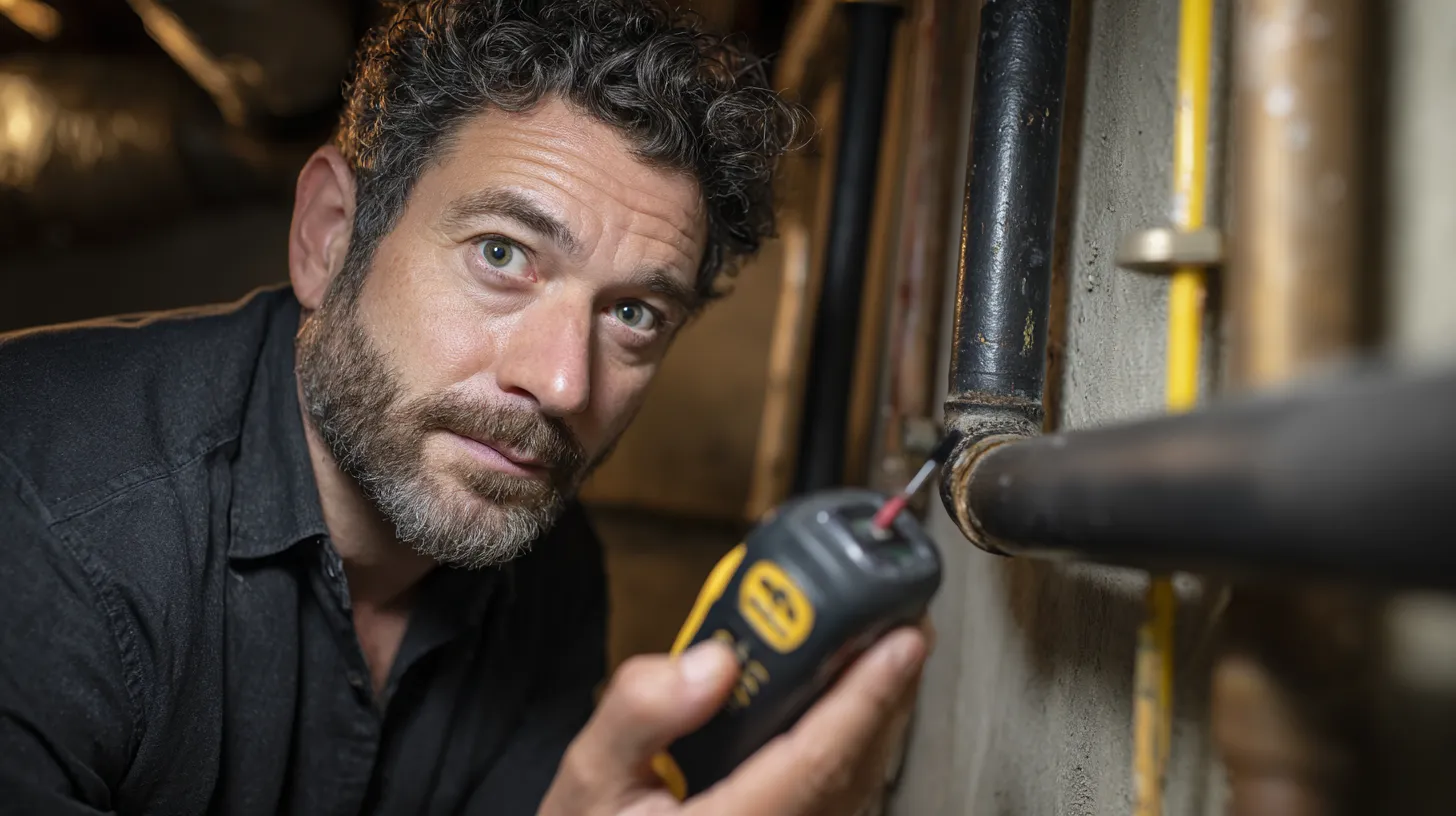
Gas line repair is the detection, isolation, replacement and testing of failed fuel gas piping that carries natural gas or propane from the meter to a building's appliances. In Grand Rapids, Michigan, the work centers on five entities: the gas line itself, the gas leak, customer-owned gas piping, the gas meter and the pressure test that proves the repair holds. Federal pipeline rules split responsibility at the meter, Michigan licenses fuel gas piping as a mechanical trade, and the City of Grand Rapids permits the work on its mechanical permit application. Gas line repair in the Grand Rapids area always starts the same way: everyone leaves the building first, then calls 911 or the gas utility from outside.
Gas Leak Warning Signs and the First Response
Gas leak warning signs decide when gas line repair becomes an emergency, and the first response follows a fixed order. Five signs cover most leaks:
- Rotten egg odor: utilities add an odorant, mercaptan, so natural gas smells like rotten eggs or a burnt match.
- Hissing or blowing sound near a pipe, fitting, valve or meter.
- Dead or discolored vegetation in a strip over a buried line.
- Continuous bubbling in standing water or wet ground.
- A carbon monoxide alarm or a yellow, flickering burner flame, which signals incomplete combustion at an appliance rather than a piping leak.
DTE Energy adds seasonal signs over buried lines: a melted patch of snow in winter, a frozen patch of ground in summer, unusually dry or hardened soil and dirt blowing from a hole in the ground. DTE also warns that some people do not smell the odorant and that candles or air fresheners mask it, so a missing odor never rules out a leak.
The first response does not change with the sign. Occupants leave the building first, then call 911 or the gas utility from outside. DTE Energy tells people to go to an outside location where the odor fades, call 911 from that safe location, then call the utility's leak line and warn others away. Consumers Energy tells people to leave, avoid every electric device including cell phones, and, once safely outside, call 911 first and the utility second. Both utilities tell occupants not to search for the leak. Light switches, doorbells, garage door openers and flames stay untouched until responders clear the building.
Gas Piping Materials in Grand Rapids Buildings
Gas piping materials set how a line fails and how a repair joins old pipe to new. Five materials and parts appear in most Grand Rapids homes and businesses:
- Black iron pipe (black steel), the traditional choice for interior gas lines, joins with threaded fittings and unions.
- Corrugated stainless steel tubing (CSST) arrives in long, flexible, jacketed runs with fewer joints.
- Polyethylene (PE) pipe carries gas underground and outdoors for its corrosion resistance.
- Galvanized steel pipe serves above-ground indoor and outdoor runs.
- Flexible appliance connectors link the rigid piping to a range, dryer or water heater through an appliance shutoff valve.
CSST carries a bonding rule that black iron does not. The International Fuel Gas Code (section 310.1.1) and NFPA 54 require CSST to be bonded to the building's electrical grounding electrode system with a jumper no smaller than 6 AWG copper. The NFPA 54 committee added the rule after published reports of lightning damage to CSST, and CSST manufacturers now require direct bonding in their installation instructions.
Material prices differ. HomeGuide's 2026 cost guide, the source for the material descriptions above, lists material-only prices per linear foot of $5–$10 for black iron, $2–$10 for CSST, $3–$9 for galvanized steel and $1–$3 for high-density polyethylene. Material choice follows the run's location: threaded steel indoors, PE underground and CSST where long flexible runs save joints.
Causes of Gas Line Failure
Gas line failure follows five causes, and each cause points to a different repair. Corrosion attacks metallic pipe in contact with soil and moisture; federal rule 49 CFR 192.16 names corrosion and leakage as the hazards of unmaintained buried piping. Excavation damage comes from a fence post, a landscaping stake or a trench that strikes an unmarked private line. Loose threaded joints leak when thread sealant ages or vibration works a union loose. Lightning damages CSST that lacks a bond. Appliance moves and remodels strain flexible connectors, as when a range shifts during a kitchen remodel or a dryer gets pushed against its connector.

Pipe age raises exposure to the first and third causes. Grand Rapids housing runs older than its suburbs: the U.S. Census Bureau's American Community Survey (2020–2024) puts the median Grand Rapids home at 1953 and the share built before 1940 at 37.5%, against medians of 1983 in Kentwood and 1984 in Walker. Older buildings carry older threaded steel, older buried yard lines to garages and more decades of remodels layered onto the original piping.
The same five causes reach restaurants and commercial kitchens, where ranges, fryers and ovens connect to the rigid piping through flexible connectors and appliance shutoff valves.
Gas Line Repair and Testing Methods
Gas line repair methods follow a fixed sequence, and testing closes every repair. The sequence runs:
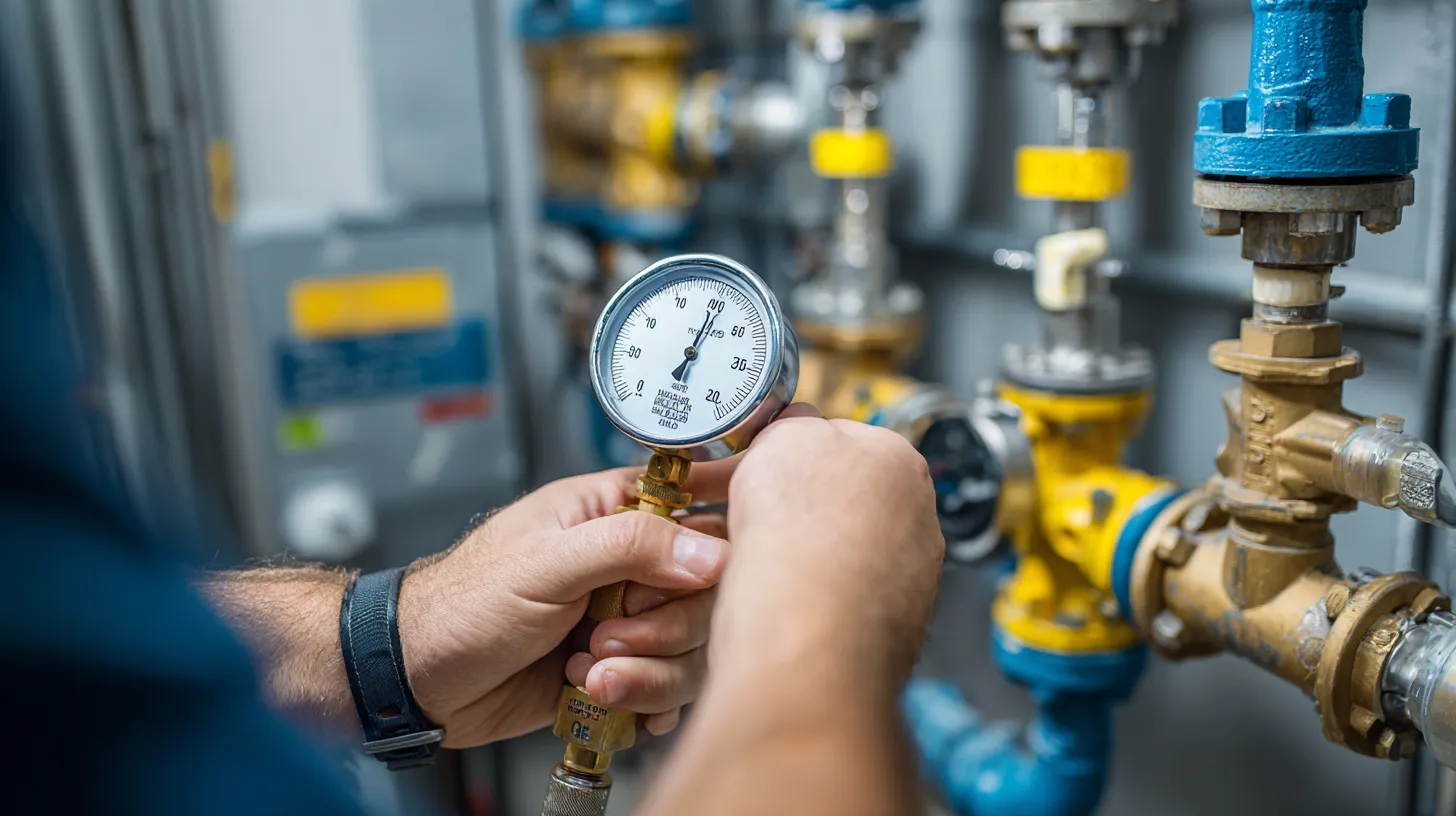
- Leak detection with an electronic combustible gas detector and a soap-solution check at joints.
- Isolation of the affected section or appliance at its shutoff valve.
- Repair: a new fitting or union for a leaking joint, a replacement section for corroded or damaged pipe, or a new connector for a cracked appliance line.
- Pressure test of the repaired section: the installer pressurizes the isolated piping and watches a gauge for any drop.
- Inspection and relight: in Grand Rapids, the city's mechanical permit application bars covering or operating the work until the Mechanical Inspector approves it; appliances relight after that.
Repair cost follows the job type. HomeGuide's 2026 cost guide lists these national ranges for materials and labor:
| Job | Typical cost |
|---|---|
| Repair labor | $75–$150+ per hour |
| Extending an existing line to one nearby appliance (10–30 ft) | $350–$800 |
| New line from the meter to one appliance | $500–$2,000 |
| Lines to 2–3 appliances | $1,200–$3,000 |
| New service line from the street | $2,000–$10,000+ |
| Standard pressure test | $75–$150 |
The same guide lists $15–$50+ per foot installed, trenching at $5–$15+ per foot and directional boring at $10–$30 per foot for buried runs.
Ownership, Permits and Rules for Gas Piping
Ownership, permits and rules decide who repairs which part of a gas system, who marks it before digging and who signs off on the work. Five bodies and rules matter most:
| Part of the system | Who handles it | Source |
|---|---|---|
| Service line up to the meter outlet | The gas utility | 49 CFR 192.3 |
| Customer piping past the meter, including buried yard lines | The property owner, through a contractor | 49 CFR 192.3, 192.16 |
| Locating utility lines before digging | MISS DIG 811 member utilities | missdig811.org |
| Locating private buried lines | Private locating companies, for a fee | missdig811.org |
| Permit and inspection inside Grand Rapids | Grand Rapids Development Center, mechanical permit | City of Grand Rapids |
The federal line falls at the meter. Under 49 CFR 192.3, a service line ends at the outlet of the customer meter or at the connection to customer piping, whichever sits further downstream. Under 49 CFR 192.16, a utility that does not maintain a customer's buried piping notifies the customer once in writing that it does not maintain that piping, that the piping faces corrosion and leakage hazards, and that the owner benefits from periodic leak inspections, corrosion inspections for metallic pipe, locating before excavation and hand digging near the line.
A second federal rule protects the service line itself. Under 49 CFR 192.383, utilities install an excess flow valve on every new or replaced service line to a single-family home after April 14, 2017; the valve shuts off gas flow when a line gets severed. Customers on older lines hold a right to request one, and the utility's rate-setter decides who pays.
Permit offices outside Grand Rapids follow the same trade structure. East Grand Rapids uses Cascade Township Building Inspection Services for building, mechanical, electrical and plumbing permits, and Grandville routes mechanical and plumbing permits through Professional Code Inspections.
DTE Energy and Consumers Energy Tell Anyone Who Smells Gas to Leave First and Call 911 From Outside
Both utilities publish the same order: leave first, call second, and call only from outside. DTE Energy's steps run leave the area, call 911 from a safe location, call the DTE gas leak hotline and warn others to stay away. Consumers Energy's steps run leave right away, get to fresh air, skip every electric device including cell phones, then call 911 first and the utility second once safely outside. The order matters because a phone, switch or doorbell inside a gas-filled room supplies a spark. Gas line repair begins only after responders clear the building; until then, black iron gas pipe and appliance connectors stay out of service until a qualified technician tests and repairs them.
Federal Rules End the Gas Utility's Service Line at the Meter Outlet
Federal pipeline rules place the utility's responsibility boundary at the meter. 49 CFR 192.3 ends the service line at the outlet of the customer meter or at the connection to customer piping, whichever sits further downstream. Everything past that point, including a buried line from the meter to a detached garage, a pool heater or an outdoor grill, counts as customer piping. 49 CFR 192.16 defines customer buried piping as the run up to the first building downstream, or up to the principal gas equipment when the line enters no building, and requires the utility to tell the customer in writing that it does not maintain that piping. A leak on customer piping stays the owner's repair even when the utility answers the leak call.
Michigan Requires MISS DIG 811 Notice at Least 3 Business Days Before Any Digging
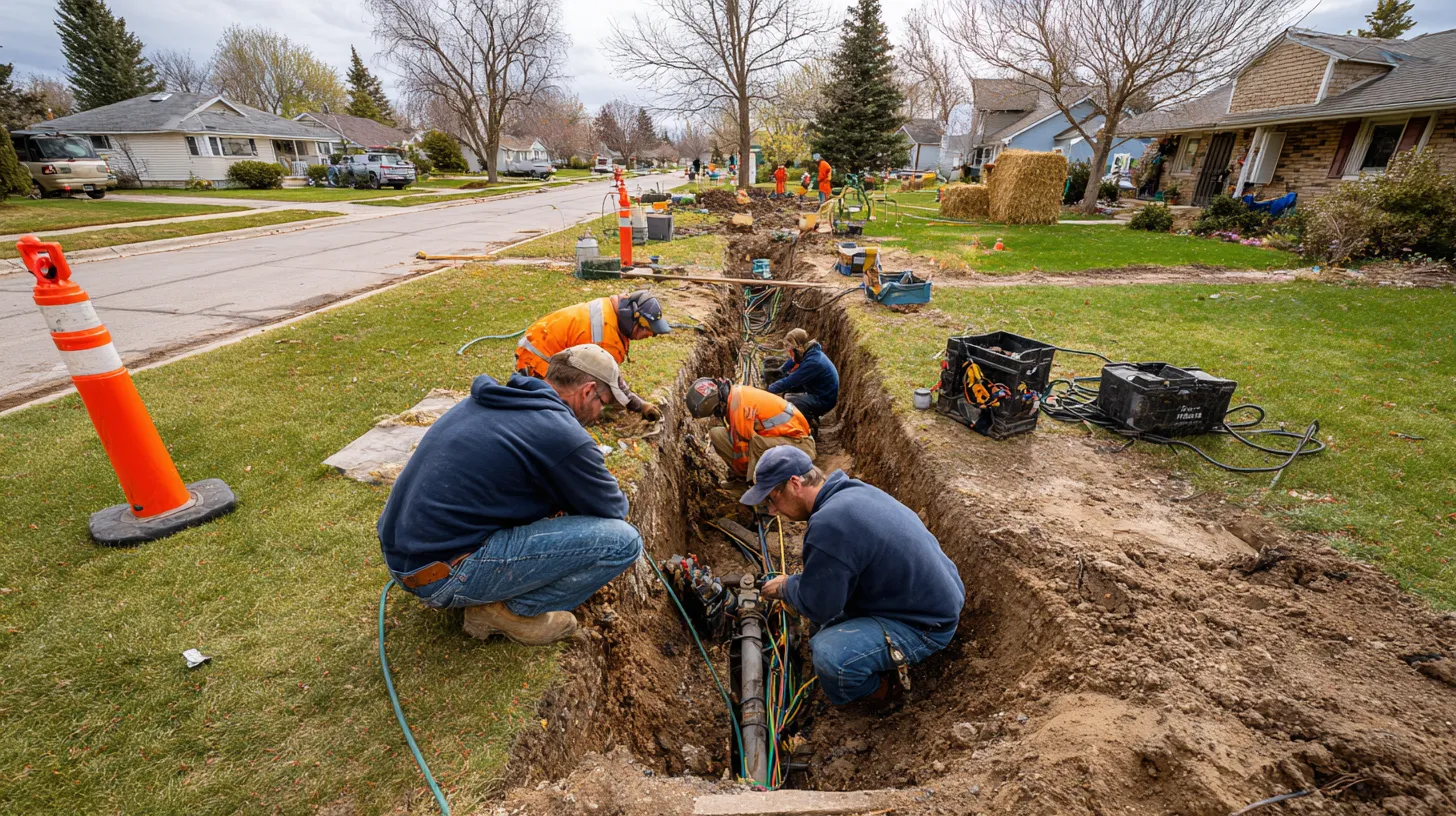
MISS DIG 811 handles locate requests in Michigan, and its homeowner guidance requires contact at least 3 business days before a project of any size or depth. The request costs nothing and goes in by calling 811 or online at missdig811.org. Member utilities mark their own lines; private lines stay unmarked, and private locating companies mark them for a fee. Within 4 feet of either side of a mark, digging proceeds by hand rather than with power tools. Digging starts within 14 days and finishes within 21 days of the ticket's Work Legal Start Date, or a new ticket follows. A buried customer gas line to a garage or grill falls into the unmarked group, which explains why excavation damage ranks among the common causes of gas line failure.
Grand Rapids Lists Gas Piping on Its Mechanical Permit Application
Gas line work inside Grand Rapids goes through the Development Center as a mechanical permit. The city's Trade Permits page groups mechanical, electrical and plumbing permits, and its Application for Mechanical Permit (revision 6.11.24) lists "Gas Piping" as an item priced by each item's separate bid:
| Bid price of the gas piping work | Permit item fee |
|---|---|
| Under $3,000 | $31 |
| $3,000–$7,999 | $42 |
| $8,000–$10,999 | $57 |
| $11,000–$15,000 | $73 |
| Over $15,000 | $71 plus $11 for each $3,000 over $15,000 |
A non-refundable $52 application fee includes one inspection, and the city charges a $173 administrative fee for work started without a permit. The homeowner affidavit limits owner-pulled permits to work in a house the owner lives in or is about to occupy, under the Michigan Mechanical Code, and bars enclosing, covering or operating the work before the Mechanical Inspector approves it.
Michigan Licenses Fuel Gas Piping as a Mechanical Contractor Work Classification
Michigan's Department of Licensing and Regulatory Affairs (LARA), through its Bureau of Construction Codes, lists Fuel Gas Piping, Fuel Gas Piping and Venting and LP Distribution Piping among the work classifications for mechanical contractor licensing. Each classification requires at least 3 years of experience in that work and a passed examination. LARA states that licensed mechanical contractors perform installations, alterations and servicing and secure permits. Grand Rapids follows the same structure by listing gas piping on its mechanical permit application, inspected by its Mechanical Inspector.
Frequently Asked Questions
What Happens First When A Building Smells Of Natural Gas?
Everyone leaves the building first, then calls 911 or the gas utility from outside. DTE Energy and Consumers Energy both publish that order and add three rules: no light switches, phones or flames inside, and no searching for the leak. Repair work starts only after responders clear the building.
Who Owns The Gas Line Between The Meter And A Grand Rapids Building?
Piping downstream of the meter is customer piping. Federal rule 49 CFR 192.3 ends the utility's service line at the meter outlet or the connection to customer piping, whichever sits further downstream, and 49 CFR 192.16 requires utilities to tell customers in writing that they do not maintain customer buried piping.
Does Gas Line Work In Grand Rapids Need A Permit?
Gas line work in Grand Rapids requires a mechanical permit. The Development Center lists gas piping on its Application for Mechanical Permit, priced by the job's bid, from $31 for work under $3,000. The $52 application fee includes one inspection, and the work stays uncovered and out of operation until the Mechanical Inspector approves it.
How Is A Gas Line Tested After A Repair?
A pressure test checks the repaired piping before gas returns to the appliances. The installer isolates and pressurizes the section, watches a gauge for any drop and checks joints with a detector or soap solution. HomeGuide's 2026 cost guide lists standard pressure tests at $75–$150 and extended 12- or 24-hour tests at up to $500.
Does MISS DIG 811 Mark A Buried Gas Line To A Garage Or Grill?
MISS DIG 811 leaves private lines unmarked. Member utilities mark their own facilities, and a buried customer line to a detached garage, grill or pool heater counts as private. Private locating companies mark those lines for a fee. The MISS DIG request still goes in at least 3 business days before digging.
Common Misconceptions About Gas Line Repair in Grand Rapids
Misconception: The Gas Company Repairs Every Gas Leak On A Property
The utility's service line ends at the outlet of the customer meter under 49 CFR 192.3. Piping downstream of the meter is customer piping, and 49 CFR 192.16 requires the utility to tell customers in writing that it does not maintain their buried piping. The utility answers a reported leak; repairs to customer piping go to a contractor.
Misconception: MISS DIG Marks Every Buried Gas Line In The Yard
MISS DIG 811 forwards a locate request to member utilities, which mark their own facilities. Private lines, including a buried run from the meter to a detached garage, grill or pool heater, stay unmarked. A private locating company marks them for a fee, and hand digging within 4 feet of any mark protects the rest.
Misconception: Calling A Repair Company Comes Before Leaving A Building That Smells Of Gas
Leaving the building comes first. DTE Energy tells people to leave and call 911 from a safe location, then the utility's leak line; Consumers Energy says to call 911 first once safely outside, then the utility. A phone call from inside the building risks a spark, and repair work follows only after responders clear the building.
Misconception: Every Gas Leak Smells Of Rotten Eggs
Utilities add mercaptan so leaks smell like rotten eggs, but DTE Energy warns that some people do not smell it and that candles or air fresheners mask it. A hissing or blowing sound, dead vegetation, bubbling water, a melted patch of snow in winter and a frozen patch of ground in summer also signal a leak.
Misconception: CSST Needs No Bonding Once It Is Installed
The International Fuel Gas Code (section 310.1.1) and NFPA 54 require CSST to be bonded to the electrical grounding electrode system with a jumper no smaller than 6 AWG copper. The rule followed published reports of lightning damage to CSST. A missing bond stays a code defect for as long as the tubing stays in service.
Ongoing Debates in Gas Line Repair
Black iron pipe and CSST divide installers on repairs and reroutes. Black iron resists crushing and punctures and joins existing threaded systems with standard fittings, which suits a repair inside an older Grand Rapids basement. CSST runs in long flexible lengths with fewer joints and installs faster through finished walls, but it requires bonding to the grounding electrode system and manufacturer-approved fittings. HomeGuide prices both at a similar material cost per foot, so labor, access and bonding settle the choice.
Repairing or replacing a corroded buried steel yard line divides owners after a leak. A section repair costs less and restores gas sooner. Replacement of the whole run removes every remaining corroded section, and 49 CFR 192.16 itself flags corrosion and leakage as the standing hazards of buried metallic piping. Pipe age, the leak's location and the run's length decide which approach fits.
Trenching and directional boring divide contractors on buried runs. Trenching costs $5–$15+ per foot in HomeGuide's 2026 guide and exposes the full line for inspection. Directional boring costs $10–$30 per foot but passes under driveways, walks and landscaping without opening them, which offsets restoration costs.
Owner-pulled permits divide opinion on gas work. Grand Rapids' mechanical permit application includes a homeowner affidavit for work in the owner's own occupied house under the Michigan Mechanical Code. Gas utilities and cost guides, including HomeGuide, tell homeowners never to repair gas lines themselves and to hire a licensed professional. The inspection requirement applies either way.
Requesting an excess flow valve on an existing service line divides homeowners. Supporters point to 49 CFR 192.383, which gives customers a right to request the valve, and to its function of shutting off flow when the line gets severed. Others weigh the cost, which the federal rule leaves to the utility's rate-setter to distribute.
Components of a Grand Rapids Gas Line Repair
Every gas line repair works through the same set of parts. The service line is a component of the gas utility's distribution system; it carries gas from the main to the meter and stays the utility's responsibility up to the meter outlet. The gas meter is a component of the service connection between utility and customer; it measures the gas and marks where customer piping begins. Customer-owned buried piping is a component of the building's fuel gas system; it runs from the meter to the building or to outdoor equipment, and its corrosion and excavation risks fall on the owner. The appliance shutoff valve is a component of each appliance's gas connection; it isolates one range, dryer or water heater so the rest of the system stays in service during a repair. The bonding jumper is a component of a CSST gas piping installation; it ties the tubing to the grounding electrode system to protect it from lightning. A gas line repair identifies which component failed, repairs it, pressure-tests the result and passes inspection before any appliance relights.
Summary
Gas line repair in Grand Rapids covers five areas: leak warning signs and the first response, piping materials, failure causes, repair and testing methods, and the ownership, permit and licensing rules that govern the work. Occupants leave the building first, then call 911 or the gas utility from outside. Federal rules end the utility's service line at the meter outlet, MISS DIG 811 leaves private buried lines unmarked, Grand Rapids permits gas piping as mechanical work and Michigan licenses fuel gas piping as a mechanical trade. Gas line repair in the Grand Rapids area ends with a passed pressure test and an approved inspection before any appliance relights.