What a Hidden Leak Costs on Your Grand Rapids Water Bill: 10 Years of Rates, and the 2027 Vote
Grand Rapids bills every leaked gallon twice, as water and as sewer. Eleven years of city rate studies show what a drip or a running toilet costs now, why the leak credit rarely helps, and what to watch before the City Commission votes on 2027 rates on December 15.
What Just Happened: 2027 Water Rates Go to a Vote
The City of Grand Rapids resets water and sewer rates every January 1, after a rate study the City Commission approves in December. For 2027, a June 2026 Utility Advisory Board schedule puts the preliminary study before the Commission on November 17, 2026 and the rate resolution on December 15, 2026.
The last cycle set the pattern. Rates effective January 1, 2026 raised the Water Supply System's revenue requirement by 6.38% and cut the Sewage Disposal System's by 3.09%. For a City of Grand Rapids home, the per-unit water charge went from $2.57 to $2.74 and the sewer charge from $4.53 to $4.29.
Why People Care: Every Leaked Gallon Is Billed Twice
A leak doesn't show up as a line on the bill. It shows up as extra units: each unit is 100 cubic feet, or 748 gallons, and each one carries a water charge and a sewer charge. In 2026 that's $2.74 plus $4.29, or $7.03 a unit, and the sewer part is bigger.
The Water System Rules leave no room for a refund on that sewer part. "Sewer service during a leak is not a charge in error," the rules state, so it is not refunded, and the Residential Leak Adjustment Program grants adjustments "on water consumption only." Finding the leak early is the only way to keep the cost down; the leak detection page explains how plumbers trace one, from the meter test to pinpointing a slab or wall leak.
Ten Years of Grand Rapids Rates
Every final rate study since 2004 sits on the City's website. The 2015 through 2025 studies give the charge per unit for every year from 2016 to 2026:
| Year | Water | Sewer | Water + sewer | Change |
|---|---|---|---|---|
| 2016 | $1.81 | $3.22 | $5.03 | |
| 2017 | $1.92 | $3.35 | $5.27 | +4.8% |
| 2018 | $2.00 | $3.30 | $5.30 | +0.6% |
| 2019 | $1.98 | $3.33 | $5.31 | +0.2% |
| 2020 | $2.04 | $3.58 | $5.62 | +5.8% |
| 2021 | $2.06 | $4.16 | $6.22 | +10.7% |
| 2022 | $2.16 | $4.39 | $6.55 | +5.3% |
| 2023 | $2.31 | $4.45 | $6.76 | +3.2% |
| 2024 | $2.45 | $4.38 | $6.83 | +1.0% |
| 2025 | $2.57 | $4.53 | $7.10 | +4.0% |
| 2026 | $2.74 | $4.29 | $7.03 | −1.0% |
Three patterns stand out:
- Water climbs every year now. The water charge has risen every year since 2019, by 51% over the decade, an average of about 4.2% a year.
- Sewer drives the total. Sewer has been the larger charge in every year on record, and its 16% jump in 2021 produced the biggest one-year rise in the combined charge, 10.7%.
- 2026 broke the streak. Sewer fell 5.3% in 2026, enough to outweigh a 6.6% water increase. It was the first drop in the combined charge since at least 2016, and the 2027 study will show whether it lasts.
What Each Leak Costs, Then and Now
The same leak costs more each year because the units cost more. At City of Grand Rapids rates:
| Leak | Gallons a year | Cost a year at 2016 rates | At 2021 rates | At 2026 rates |
|---|---|---|---|---|
| Faucet, 1 drip a second (USGS drip size) | 2,083 | $14 | $17 | $20 |
| Faucet, 1 drip a second (EPA estimate) | 3,000+ | $20 | $25 | $28 |
| Slow toilet leak, about 1 gallon an hour | 8,760 | $59 | $73 | $82 |
| An average household's leaks (EPA) | 9,300+ | $63 | $77 | $87 |
| Running toilet, 200 gallons a day | 73,000 | $491 | $607 | $686 |
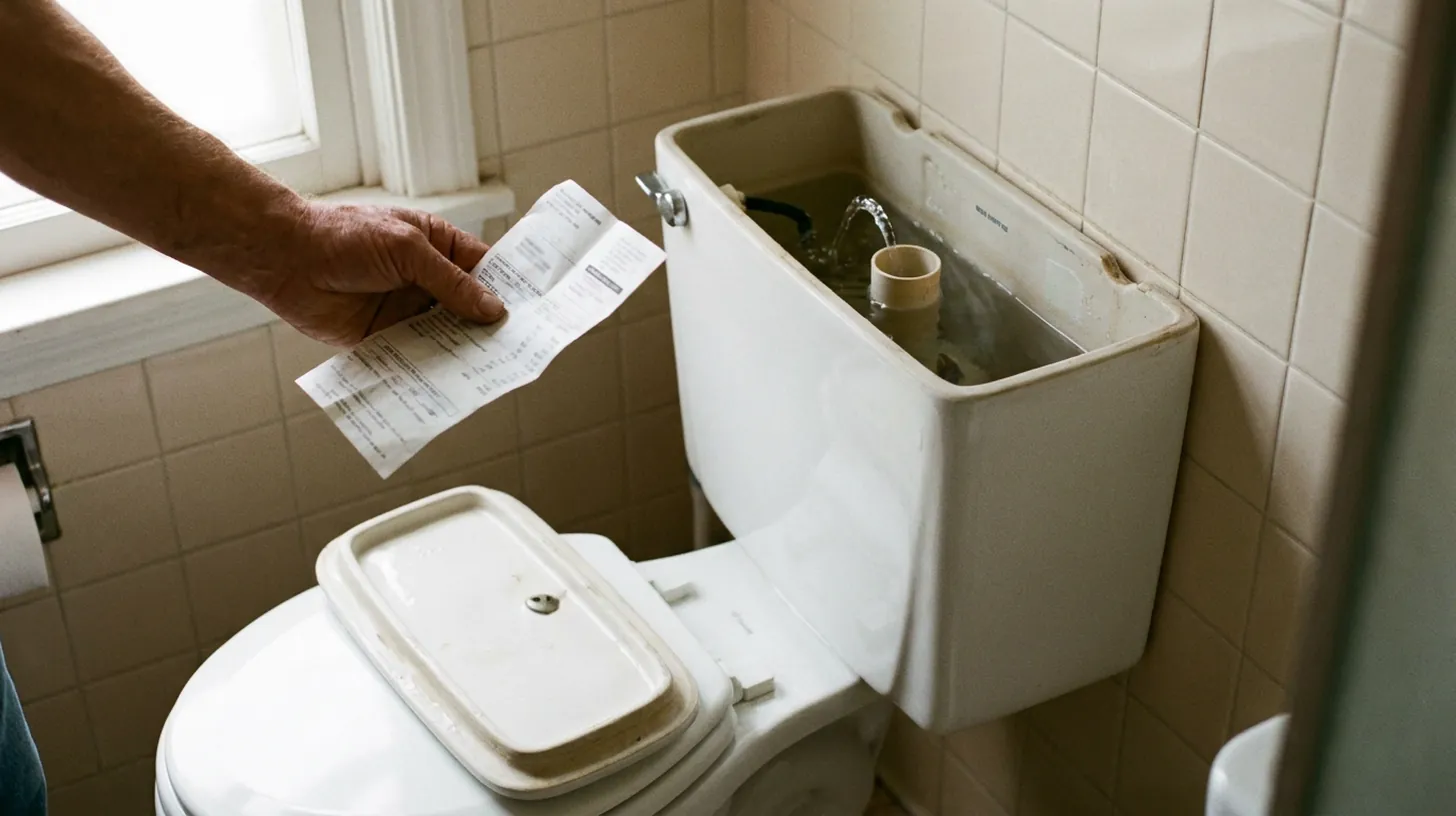
A running toilet is the leak that matters. EPA WaterSense puts an audibly running toilet at 200 gallons a day or more, and a worn flapper can run for weeks before anyone notices. For 90 days, that is 18,000 gallons, about 24 units, and $169 at 2026 rates. The Leak Bill Time Machine above runs the same math for any leak, any number of days and any of the five Grand Rapids retail rate areas.
Neighboring Rate Areas
Grand Rapids sells water and sewer service at retail rates in four nearby communities. Their 2026 charges are lower, but the same running toilet still costs more than $500 a year:
| Retail rate area | Water + sewer per unit, 2016 | 2026 | Change | Running toilet, a year at 2026 rates |
|---|---|---|---|---|
| City of Grand Rapids | $5.03 | $7.03 | +40% | $686 |
| Cascade Township | $4.80 | $6.13 | +28% | $598 |
| Kentwood | $4.02 | $5.43 | +35% | $530 |
| Grand Rapids Township | $4.04 | $5.28 | +31% | $515 |
| Walker | $4.28 | $5.26 | +23% | $513 |
Sewer is the larger share of the per-unit charge in all five, from 54% in Grand Rapids Township to 65% in Kentwood. Parts of Kentwood, Cascade Township and Grand Rapids Township get water from other suppliers, and cities such as Wyoming set their own rates; the leak cost calculator takes the rate printed on any bill.
Why the Leak Credit Rarely Helps
Grand Rapids runs a Residential Leak Adjustment Program, and the Water System Rules (§3.3) set its terms:
- Who qualifies: a single-occupancy residential customer with four quarters of billing history, not in cutoff or final status, with one adjustment allowed every 24 months.
- How big the leak must be: water use during the leak must exceed three times normal consumption, measured as average daily use in the same quarter of the previous year.
- Proof of repair: use must return to within 5 units of the previous year's quarter, which the City checks in the second or third quarter after the repair. A home with a swimming pool may need proof of repair by a licensed plumber.
- What it pays: the Water System bears up to 25% of the water usage on the highest quarterly bill, credited on the next bill. Sewer adjustments do not qualify, and fees are not reduced.
The 3× rule is a high bar. The City's 2025 rate study uses 21 units a quarter (15,708 gallons) as the typical Grand Rapids household. A toilet running 200 gallons a day for a whole 91-day quarter adds about 24 units, for a total near 45: just over twice normal, short of the 63 units the rule requires.
To qualify, that household would need about 42 extra units, or 31,400 gallons, in one quarter: roughly 345 gallons a day, the scale of a broken supply line or an irrigation leak. Even then, 25% of the water charge on a bill of about 63 units comes to roughly $43, against more than $295 in water and sewer charges for the leaked water itself.
What To Do Now
- Run the two-hour meter test. EPA WaterSense suggests reading the water meter, using no water for two hours (faucets, ice maker, irrigation all off), and reading it again. Any change means water is leaving somewhere.
- Dye-test every toilet. Put a few drops of food coloring in the tank and wait without flushing, 10 minutes by EPA's guide or 15–30 by the Grand Rapids Water System's. Color in the bowl means the flapper leaks; EPA suggests replacing flappers about every five years.
- Compare your bill with last year's. Each quarterly bill shows units. A jump against the same quarter last year is the earliest warning, and it is the comparison the leak credit uses.
- Fix it before the quarter closes. The credit rewards only very large leaks, so the money saved comes from stopping the leak, not from the adjustment. The toilet repair page covers flappers, fill valves and running toilets, and leak detection covers leaks you can't see.
- Watch the December 15 vote. The preliminary 2027 rate study will be posted on the City's rate study page before the November 17 Commission meeting, with a period for public comment before the vote.
If a large leak does push a bill over the 3× line, pre-screen for the credit online or at 311 or 616-456-3000, then complete the application within 30 days of the pre-screen.
Frequently Asked Questions
How much does a running toilet cost on a Grand Rapids water bill?
About $686 a year at 2026 City of Grand Rapids rates, or about $169 for 90 days. EPA WaterSense puts an audibly running toilet at 200 gallons a day, which is 97.6 billing units of 748 gallons a year, and each unit costs $2.74 for water plus $4.29 for sewer.
Does Grand Rapids charge sewer on water that leaks?
Yes. The Grand Rapids Water System Rules state that sewer service during a leak is not a charge in error and is not refunded, and the Residential Leak Adjustment Program adjusts water consumption only. In 2026 the sewer charge, $4.29 a unit, is higher than the $2.74 water charge.
How do I qualify for the Grand Rapids leak credit?
The Residential Leak Adjustment Program requires a single-occupancy residential account with four quarters of billing history, water use during the leak above three times the previous year's equivalent quarter, and use back within 5 units of normal after the repair. One adjustment is allowed every 24 months. Pre-screen online or at 311 or 616-456-3000, then apply within 30 days.
How much does the Grand Rapids leak credit pay?
The Water System bears up to 25% of the water usage on the highest quarterly bill and the customer pays the remaining 75%, as a credit on the next bill. Sewer charges and fixed fees are not adjusted.
Will Grand Rapids water rates go up in 2027?
The City publishes the answer in its preliminary 2027 rate study. A June 2026 Utility Advisory Board schedule puts that study before the City Commission on November 17, 2026, and the rate resolution on December 15, 2026, with new rates effective January 1, 2027. This page will be updated with the approved numbers.
How can I tell if I have a hidden leak?
EPA WaterSense suggests reading the water meter, using no water for two hours, and reading it again; any change means water is leaving somewhere. For a toilet, add a few drops of food coloring to the tank and wait without flushing: EPA says 10 minutes, the Grand Rapids Water System 15–30. Color in the bowl means the flapper leaks. EPA WaterSense also flags winter use above 12,000 gallons a month for a family of four as a sign of a serious leak.
Sources
- City of Grand Rapids, 2025 Final Water/Sewer Rate Study (rates effective Jan 1, 2026) (Jan 1, 2026). www.grandrapidsmi.gov/media/ruhp3oma/final-rate-study-2025-1.pdf
- City of Grand Rapids, 2024 Final Water/Sewer Rate Study (rates effective Jan 1, 2025) (2025). media-002-us.cdn.govstack.com/grandrapidsmi-us/media/3keii02f/final-ra...
- City of Grand Rapids, 2020 Final Water/Sewer Rate Study (rates effective Jan 1, 2021) (2021). media-002-us.cdn.govstack.com/grandrapidsmi-us/media/aremh05q/final-ra...
- City of Grand Rapids, 2015 Final Water/Sewer Rate Study (rates effective Jan 1, 2016) (2016). media-002-us.cdn.govstack.com/grandrapidsmi-us/media/e0ipdhvc/final-ra...
- City of Grand Rapids, Water and Sewer Rate Studies index (every final study, 2004–2025) (accessed Oct 31, 2026). www.grandrapidsmi.gov/departments/water-system/water-and-sewer-rate-st...
- Grand Rapids Water System, Rules and Regulations 2026 (§3.2, §3.3 Residential Leak Adjustment Program, §3.6) (2026). www.grandrapidsmi.gov/media/x1dd52yg/2026-water-system-rules-and-regs....
- City of Grand Rapids, Request a Water Leak Credit (accessed Oct 31, 2026). www.grandrapidsmi.gov/living-in-gr/water-and-sewer-services/paying-you...
- City of Grand Rapids, Utility Advisory Board agenda packet (2027 rate timeline) (June 2026). www.grandrapidsmi.gov/media/xzrdjoy1/uab-agenda-packet-june-2026.pdf
- City of Grand Rapids, Citizen's Guide to the 2025 Final Water and Sewer Rate Study (2025). grandrapidsmi-us.govstack.com/media/ktnlnh5b/citizens-guide-to-the-202...
- WGVU, Grand Rapids proposes 2026 water rate hike and sewer decrease (Nov 17, 2025). www.wgvunews.org/news/2025-11-17/grand-rapids-proposes-2026-water-rate...
- U.S. EPA WaterSense, Fix a Leak Week (accessed Oct 31, 2026). www.epa.gov/watersense/fix-leak-week
- City of Grand Rapids, Water Leak Detection (toilet dye test) (accessed Oct 2026). www.grandrapidsmi.gov/living-in-gr/water-and-sewer-services/paying-you...
- U.S. Geological Survey, Drip Calculator (1/4 milliliter drip) (accessed Oct 2026). www.usgs.gov/special-topics/water-science-school/science/water-science...
- WOOD TV, Grand Rapids agrees to pay $195K to residents impacted by water main break flooding (Feb 2026). digital-release.woodtv.com/video/grand-rapids-agrees-to-pay-195k-to-re...
How the numbers were built: Rates are the City of Grand Rapids retail commodity charges per unit (100 cubic feet, 748 gallons) from each year's Final Water/Sewer Rate Study, 2015 to 2025 studies, for rates effective January 1, 2016 to 2026. Leak flows: EPA WaterSense (running toilet, 200 gallons a day; faucet at one drip a second, more than 3,000 gallons a year), the USGS drip size of 1/4 milliliter (15,140 drips a gallon) and a City of Kirkland, Washington utility table (slow toilet leak, about 1 gallon an hour). Costs assume every leaked gallon is billed for water and sewer, as the Water System Rules describe, and leave out the monthly service charges, which a leak does not change. The 2027 figures in the tool are a scenario that grows each 2026 rate at its own 2016–2026 average, not a City estimate; they will be replaced by the approved 2027 rates. The leak credit check follows Water System Rules §3.3 and compares quarterly totals, while the City compares average daily use, so a borderline result may differ.