Well Water Testing Calendar for Kent and Ottawa County
A yearly testing schedule for private well owners around Grand Rapids, built from Michigan EGLE, MDHHS, EPA and county health department guidance. Pick your town and test month to get your county contact and a calendar reminder.
Reviewed October 24, 2026 · Free to use · Bookmark it for next time

- Every yearColiform bacteria and nitrate test, per Michigan EGLE
- 3–5 yearsArsenic and lead test interval, per MDHHS
- 2.6 millionMichiganders who rely on private wells (EGLE, 2026)
- $20Ottawa County self-service coliform test (fee page, Oct. 2026)
Plan Your Yearly Well Test
Tests To Order
Which Well Tests To Run, and How Often
Michigan sets a well test only at installation, so the ongoing schedule belongs to the owner. EGLE, MDHHS and EPA agree on a yearly bacteria and nitrate test, with metals and PFAS on longer cycles.
| Test | How Often | Source |
|---|---|---|
| Total coliform bacteria, E. coli | Every year | EGLE, MDHHS, EPA |
| Nitrate, nitrite | Every year | EGLE, MDHHS |
| Total dissolved solids, pH | Every year | EPA, Ottawa County |
| Arsenic, lead | Every 3 to 5 years | MDHHS |
| PFAS | At least once | MDHHS |
| Other tests for local conditions | As your health department advises | EGLE |
Test Sooner Than the Calendar When
- Flooding reaches the area around the well.
- Repairs or replaced parts touch the well system.
- Taste, color or odor changes.
- Problems turn up in nearby wells or the area.
- Conditions near the well change, such as new construction.
EPA and the Ottawa County Department of Public Health list these triggers. EPA adds that homes with small children or older adults benefit from more frequent testing.
Where To Get a Well Test Kit Around Grand Rapids
Kent and Ottawa counties cover all 25 towns this site serves. Use a lab certified for drinking water; EPA directs well owners to state-certified labs or the local health department.

Kent County Health Department
Environmental Health Division, 700 Fuller Ave NE, Grand Rapids. The division issues well and septic permits, keeps well records and runs water samples during property evaluations. Call to ask about current sample bottles and fees.
Ottawa County Department of Public Health
Bottles at 12251 James St, Holland, Monday to Friday, 8 a.m. to 5 p.m. (closed 12:15 to 1:15 p.m.). Testing information: (616) 393-5645.
- Bacteria (coliform): $20
- Partial chemical: $25
- Bacteria and partial chemical: $45
- Lead: $25
Self-service fees effective October 1, 2026, subject to change with lab rates.
EGLE Drinking Water Laboratory
The state lab in Lansing ships sample containers; order them at 517-335-8184. The lab takes no prepayment and invoices after testing. EGLE raised its lab fees on October 1, 2026; check the current fee schedule before ordering.
EGLE's free private well kits are suspended because of demand.
Match the bottle to the test. EGLE requires the sample container specified for each test, and coliform results need a 24-hour incubation before the lab reports.
What To Do After Flooding Reaches Your Well
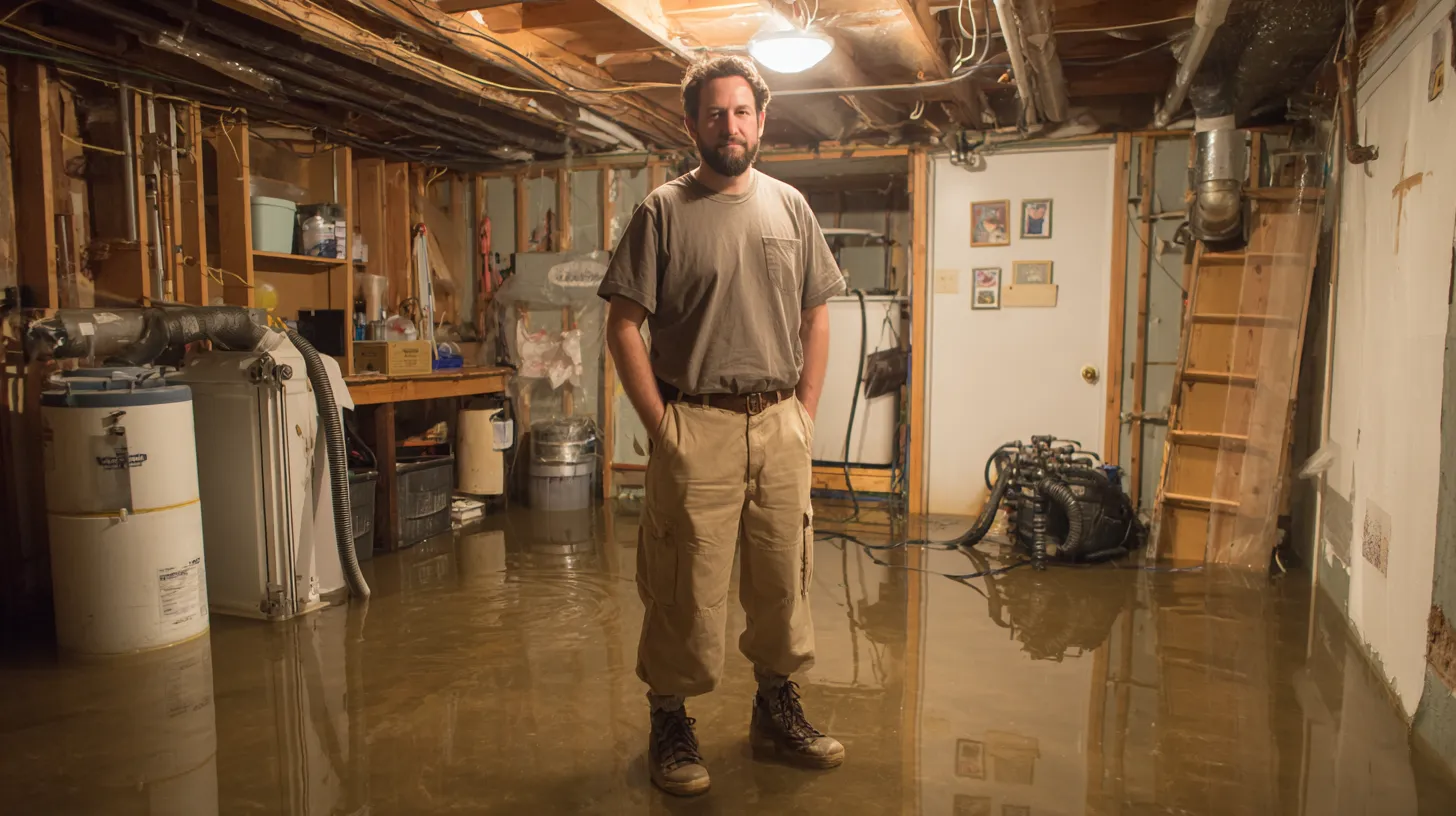
Floodwater carries contaminants into wells, so official guidance treats a flooded well as unsafe until a lab says otherwise. The Kent County Health Department says not to use the water for drinking, cooking or brushing teeth until it is tested.
1 Turn off all electricity to the well area before clearing debris (CDC).
2 Use bottled water, or boil well water at a rolling boil for 1 minute, until testing clears it (CDC).
3 Have a well or pump contractor disinfect the well (CDC).
4 Wait at least 7 to 10 days after disinfection and until the chlorine is flushed, then sample (CDC).
Fuel or chemical smell? CDC states that boiling and disinfection do not make water contaminated with fuel or toxic chemicals safe; contact your local health department. EGLE advises against disinfecting or using a flooded dug well at all.
After a Positive Test Result
A positive result starts with your local health department. EPA says the department will advise a re-test to confirm the contaminant and its concentration, and some problems are corrected with on-site treatment while others call for a new water source or well.
Call the Health Department
Kent County Health Department or Ottawa County Department of Public Health, depending on your town.
Re-Test To Confirm
EPA: confirm the contaminant's presence and concentration with a second test before choosing a fix.
Disinfect or Treat
For bacteria, EGLE publishes Michigan's Water Well Disinfection Manual, and CDC says a well or pump contractor handles disinfection. The manual notes repeat flushing or disinfection when bacteria return.
Shock Chlorination Is a Contractor Job
Shock chlorination, the bleach disinfection of a well, clears bacteria only. EPA notes that disinfection does nothing for pesticides, heavy metals or other non-biological contamination. Treatment equipment for chemical results follows the health department's direction and the lab numbers.
PFAS and Private Wells in Michigan
MDHHS recommends testing a private well for PFAS at least once. The Michigan PFAS Action Response Team (MPART) keeps the official information for well owners, including its private residential well sampling guidance and a list of certified PFAS laboratories.
- MPART: Drinking Water and Wells
- MPART: Laboratories Offering Home Testing
- MDHHS, for free testing in areas under PFAS investigation: 844-934-1315
- EGLE PFAS line: 800-662-9278
Wells Close to Grand Rapids
Private wells serve rural Algoma, Cascade, Caledonia and Bowne (Alto) townships, while Rockford, Lowell, Cedar Springs, Sparta and Plainfield Township run public systems on municipal wells. Cannon Township reported low-level PFAS in shallow groundwater in 2026, with EGLE offering testing to nearby well owners.
Well pumps, pressure tanks and treatment equipment are plumbing work; the water quality services page covers that side.
Common Questions
How Often Do I Test My Well in Michigan?
Every year for coliform bacteria and nitrate, according to Michigan EGLE, which also recommends a yearly well inspection. MDHHS adds E. coli and nitrite to the yearly list, arsenic and lead every 3 to 5 years, and PFAS at least once. Michigan requires a well test only at installation, so later tests are the owner's job.
Where Do I Get a Well Water Test Kit Near Grand Rapids?
Ottawa County residents pick up bottles at the Ottawa County Department of Public Health office at 12251 James St in Holland or call (616) 393-5645. Kent County well and septic matters run through the Kent County Health Department's Environmental Health Division at 700 Fuller Ave NE in Grand Rapids. Statewide, the EGLE Drinking Water Laboratory in Lansing ships kits; call 517-335-8184.
Are Free Well Test Kits Still Available in Michigan?
Not at the time of review. EGLE's private well testing page states that it no longer has free test kits because of overwhelming interest. MDHHS tests for free only in areas under PFAS investigation; call 844-934-1315 to ask whether your home is in one.
What Do I Do If My Well Flooded?
Treat the water as unsafe. The Kent County Health Department says not to use water from a flooded well for drinking, cooking or brushing teeth until it is tested. CDC says to boil water at a rolling boil for 1 minute or use another source until then, and to have a well or pump contractor disinfect the well.
Does My Town Have Public Water or Private Wells?
It depends on the street. Rockford, Lowell, Cedar Springs, Sparta and Plainfield Township run public systems on municipal wells, while rural parts of Algoma, Cascade, Caledonia and Bowne (Alto) townships rely on private wells. Pick your town in the tool above to see its published water source.
Sources and How This Tool Works
Test frequencies come from Michigan EGLE, the Michigan Department of Health and Human Services (MDHHS) and the U.S. EPA. County contacts and prices come from the Kent County Health Department and Ottawa County Department of Public Health pages linked below. Town water notes come from each municipality's published water information. The tool stores your town, month and last-test answer in this browser only.
- Michigan EGLE: How to get your drinking water tested
- Michigan EGLE: Private well testing
- Michigan EGLE: FAQ, drinking water testing at the EGLE lab
- Michigan EGLE: Drinking Water Week and Private Residential Well Awareness Day (May 2026)
- Michigan EGLE: Protecting Your Private Water Supply in an Emergency
- Michigan EGLE: Michigan's Water Well Disinfection Manual
- MDHHS: Care for MI Drinking Water, Test
- Michigan PFAS Action Response Team (MPART)
- MPART: Drinking Water and Wells
- MPART: Laboratories Offering Home Testing
- U.S. EPA: Protect Your Home's Water (private wells)
- CDC: How to Disinfect Wells After an Emergency
- Kent County Health Department: Septic and Well
- Kent County Health Department: Cleaning Up the Mess (after a flood or sewage backup)
- Kent County Water Supply Regulations
- Kent County Health Department: Sanitary Facility Evaluation Guidelines
- Kent County: FAQs (well and septic records)
- Cannon Township (2026 PFAS notice, EGLE well testing)
- Algoma Township Master Plan 2025 (private wells)
- Cascade Charter Township: utilities (private wells outside the service area)
- Bowne Township (well and septic permits)
- Ottawa County Department of Public Health: Well Water Testing
- Ottawa County Department of Public Health: Environmental Health Fees
General information for Grand Rapids-area properties, reviewed October 24, 2026. Rules, rates and programs change; the linked source's current version controls. This page is general information drawn from EGLE, MDHHS, EPA, CDC and county health department guidance. It is not medical advice and does not interpret test results or diagnose water or health problems. For questions about a result or your health, contact your local health department or your doctor.
Water, sewage or gas where it doesn't belong? Grand Rapids Michigan Plumber answers 24/7.
Request Service Call (616) 345-5690