Grand Rapids Water Quality Services
Grand Rapids water quality services improve taste, reduce hard water damage, and protect plumbing systems using proven water filtration, water softening, and contaminant removal solutions. Water treatment systems target common water conditions in Grand Rapids, Kent County, and surrounding communities where dissolved minerals, iron, manganese, chlorine, and sediment affect fixtures, appliances, and drinking water.
Water Quality Problems And Symptoms We Fix
- Hard water stains on faucets, shower doors, sinks, and tubs.
- Soap not lathering properly, soap scum buildup, and film on dishes.
- Dry skin after showering and dull hair from mineral-heavy water.
- Metallic tasting water and cloudy drinking water at the tap.
- Orange staining in sinks, toilets, tubs, and laundry from iron in water.
- Sulfur smells, rotten-egg odor, and taste changes tied to sulfur compounds.
- Visible reddish sediment, grit, and particulate matter from sediment and corrosion.
- Reduced water pressure from mineral scale buildup inside pipes and fixtures.
Failure Scenarios Water Treatment Prevents
- Water heater failing due to scale buildup on heating elements and tank walls.
- Clogged pipes from mineral buildup that narrows internal pipe diameter and restricts flow.
- Appliances damaged by hard water, including dishwashers, washing machines, and ice makers.
- Corrosion inside plumbing lines that accelerates leaks, pinholes, and fixture wear.
- Iron bacteria clogging a private well system and creating slime buildup in plumbing.
- Premature failure of fixtures and valves caused by scale, grit, and corrosive water conditions.
Water Testing And Monitoring For Accurate System Selection
Water testing identifies the specific contaminants and mineral levels that drive system selection. Testing commonly includes water hardness test results for calcium and magnesium, TDS testing for dissolved solids, bacteria testing for private well safety, iron level testing for staining risk, and municipal water analysis for chlorine and sediment conditions.
- Water hardness testing: quantifies calcium and magnesium levels that cause scale buildup.
- TDS testing: measures dissolved solids that influence taste and RO performance.
- Iron and manganese testing: detects staining metals that require iron removal systems.
- Bacteria testing: supports private well water treatment planning and UV purification needs.
- Municipal supply review: validates chlorine reduction system needs and sediment filtration placement.
Core Water Treatment Services In Grand Rapids
Whole House Water Filtration Systems
Whole house water filtration treats water at the point-of-entry so every tap receives filtered water. Common configurations combine a sediment filter for grit and particulate, an activated carbon filter for taste and odor improvement, and a whole house filter housing sized for proper flow capacity.
- Sediment filtration reduces grit, rust particles, and turbidity that damage fixtures and valves.
- Activated carbon filtration reduces chlorine taste, chlorine odor, and organic compounds.
- Whole house filter setups protect bathrooms, laundry, kitchen fixtures, and plumbing lines.
Water Softener Systems And Water Conditioning
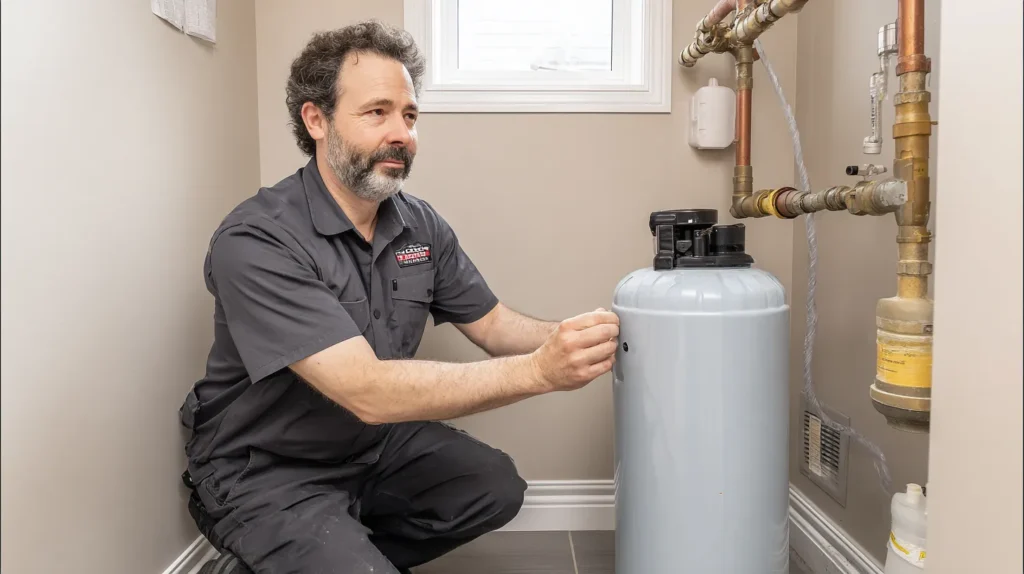
Water softener installation reduces calcium and magnesium hardness minerals that create scale buildup and soap scum. Softening options include salt-based softener systems, salt-free conditioners for scale prevention, dual-tank softeners for higher demand, and metered softeners that regenerate based on water use.
- Salt-based softener: uses resin tank ion exchange to remove hardness minerals.
- Salt-free conditioner: reduces scale formation behavior without traditional ion exchange.
- Dual-tank softener: maintains continuous soft water supply during regeneration cycles.
- Metered softener: improves salt efficiency and regeneration cycle control based on usage.
- High-capacity softener: supports multi-bathroom homes and higher flow rate requirements.
Reverse Osmosis Drinking Water Systems
Reverse osmosis systems improve drinking water taste and reduce total dissolved solids. Typical RO installs include membrane housing, storage tank size matched to household demand, sediment and carbon pre-filtration, and a dedicated drinking water faucet.
- RO membrane reduces dissolved solids and improves drinking water clarity.
- Pre-filters protect the membrane from sediment and chlorine exposure.
- System sizing considers gallons per day, tank capacity, and household drinking needs.
Iron, Manganese, And Sulfur Removal
Iron removal systems address orange staining, metallic taste, and sediment issues. Manganese filters address dark staining. Sulfur removal systems reduce odor issues and taste disruptions. Many systems use specialized oxidation methods and backwash cycles to maintain media performance.
- Iron filter removes dissolved iron and particulate iron that stains fixtures and laundry.
- Manganese filter reduces staining metals and improves clarity.
- Sulfur removal system targets odor-causing compounds linked to rotten-egg smell.
- Backwashing media systems maintain performance and reduce clogging risk.
UV Purification And Disinfection Support
UV purification systems target microorganisms in private well systems and specialty applications. UV systems are selected by flow capacity and are installed with proper pre-filtration to protect quartz sleeve performance and lamp lifespan.
- UV systems support bacteria control when testing indicates microbial risk.
- Pre-filtration improves UV effectiveness by reducing turbidity and sediment shielding.
Protection Systems That Reduce Plumbing Damage
Water conditioning and filtration protect plumbing by reducing scale, sediment abrasion, and corrosion drivers. Protection components include scale prevention systems, appliance protection strategies, corrosion control measures, and backflow prevention devices where code and use-case require it.
- Scale prevention reduces mineral deposits that restrict flow and shorten equipment life.
- Appliance protection reduces mineral damage to water heaters, dishwashers, washers, and coffee equipment.
- Pipe protection reduces internal buildup, leak risk, and valve failures.
- Backflow prevention devices support code compliance and system safety.
Repair Methods, Maintenance, And Replacement Triggers
Water treatment performance depends on correct maintenance and timely replacement. Common service actions include replacing filter cartridges, replenishing salt for salt-based softeners, sanitizing systems when iron bacteria is present, and restoring correct settings on control valves.
- Replace filter media and cartridges when pressure drop increases or taste changes return.
- Service control valve settings when regeneration timing or metering becomes inaccurate.
- Inspect brine tank and resin tank function when soft water output decreases.
- Replace RO membranes when TDS reduction declines or flow slows.
- Backwash iron removal systems on schedule to prevent media fouling and clogging.
Replacement triggers include persistent hard water buildup after service, repeated repairs, undersized flow capacity for demand, corrosion-related leaks near old plumbing, and performance decline tied to aging media or failing valves.
Tools, Materials, And Components Commonly Used
- Resin tank, brine tank, and control valve assemblies for softener installation.
- Carbon media, sediment cartridges, and filter housings for whole house filtration.
- Membrane housing, storage tank, and pre-filters for reverse osmosis systems.
- Oxidation media, backwash valves, and drain connections for iron filters.
- Pressure gauges, TDS meters, and hardness test kits for monitoring and verification.
Residential Water Quality Services In Grand Rapids
Residential water treatment supports municipal supply homes, private well systems, multi-bathroom homes, older plumbing systems, and basement utility installations. Home systems often combine whole house filtration for taste and sediment control with water softening for scale prevention and appliance protection.
- Home water softener installation reduces soap scum and scale buildup in showers and sinks.
- Private well water treatment targets iron, manganese, sulfur odors, and bacteria risk.
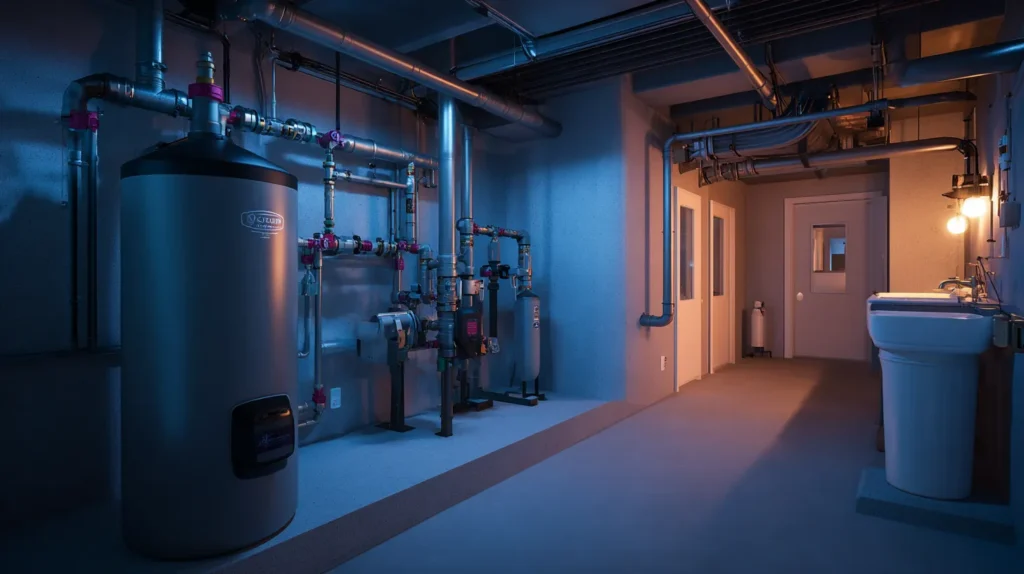
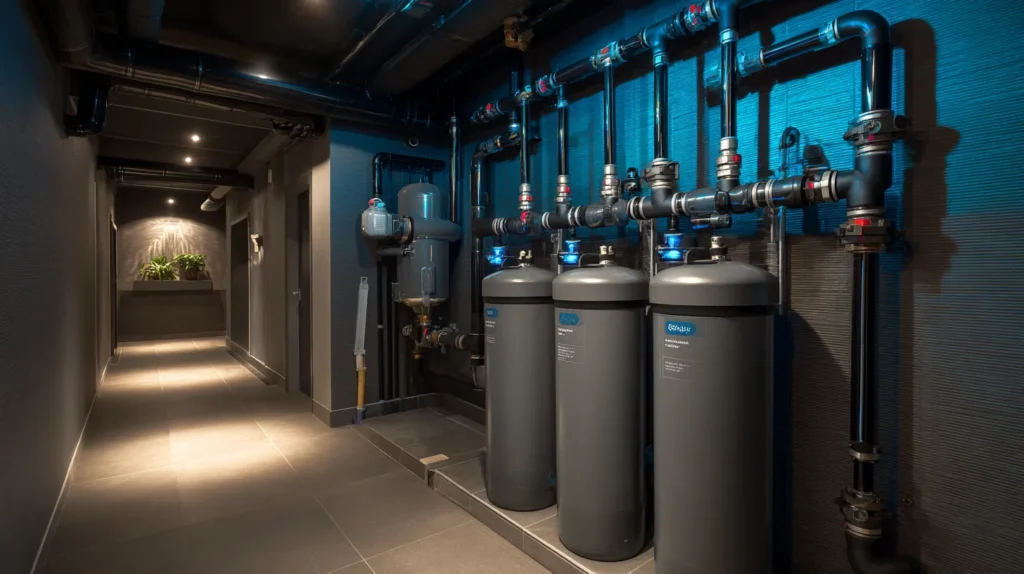
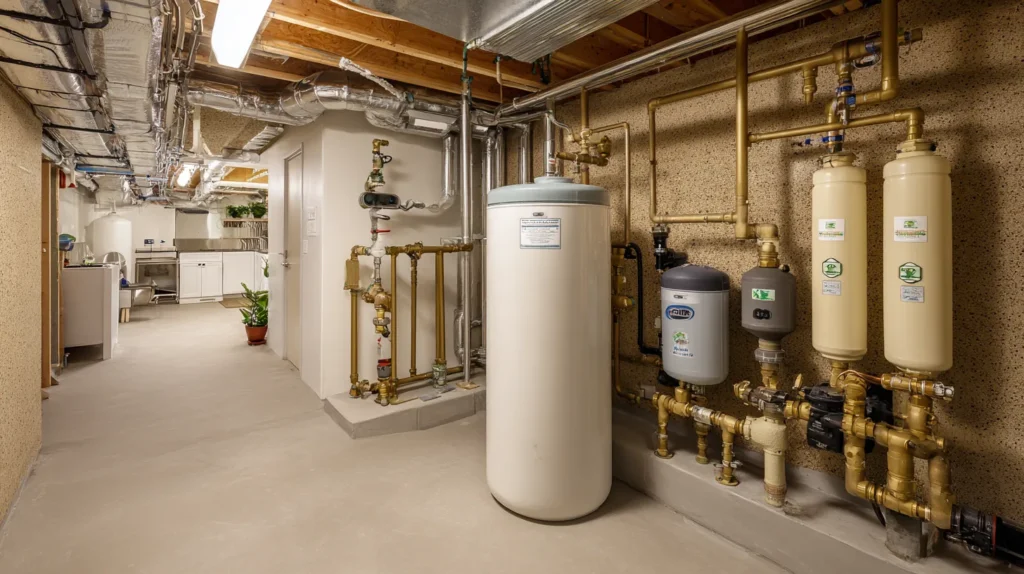
- Basement water filtration system layouts support service access and clean pipe routing.
- Municipal water filtration reduces chlorine taste and sediment that affects drinking water.
Commercial Water Treatment Systems In Grand Rapids
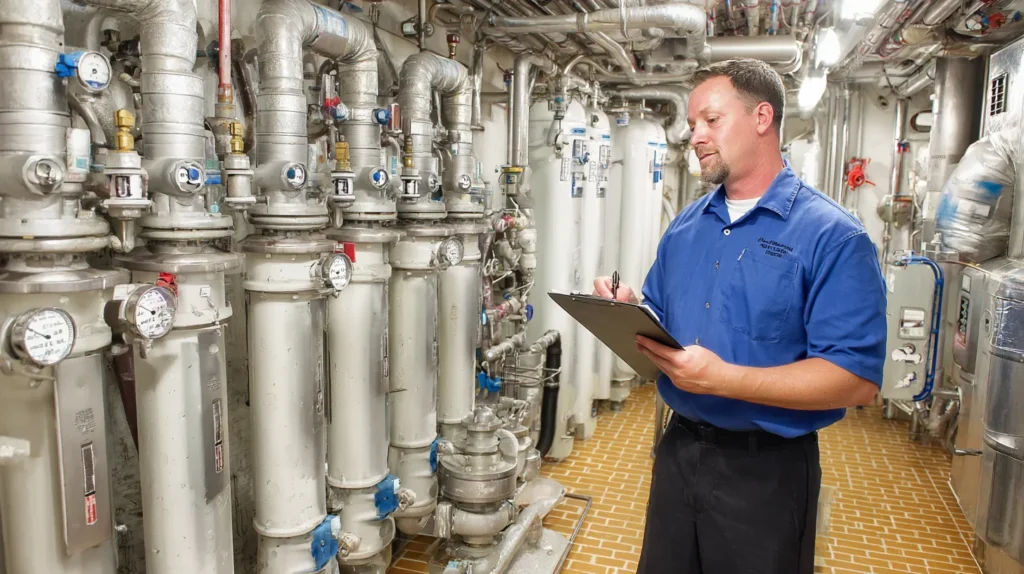
Commercial water systems protect equipment and maintain consistent water quality in facilities with high demand. Common applications include restaurant water filtration systems, office building filtration and softening, healthcare facility water quality support, apartment complex system sizing, and manufacturing filtration requirements.
- Restaurant filtration protects ice machines, beverage equipment, dishwashers, and plumbing fixtures.
- Office building softening reduces scale in restrooms and mechanical rooms.
- Apartment complex treatment supports consistent flow rate and reduces tenant complaints.
- Manufacturing filtration supports process water needs and reduces equipment scaling.
Urgency, Same-Day, And After-Hours Water Service
Water quality issues become urgent when water pressure drops, taste changes rapidly, staining escalates, or a water heater shows scale-related performance decline. Same-day water testing and fast installation support immediate damage reduction and faster return to usable water conditions.
- Same day water softener repair and troubleshooting when hardness returns suddenly.
- Emergency water filtration repair when sediment clogs fixtures or reduces flow.
- Fast water testing in Grand Rapids when iron staining or odor appears unexpectedly.
- Install water system this week when hard water damage accelerates appliance wear.
Location Variants And Service Area Signals
Grand Rapids water quality services support local intent searches such as water treatment near me, Grand Rapids water softener service, and whole house water filtration in Kent County. Service coverage commonly includes Grand Rapids, Kentwood, Wyoming, East Grand Rapids, Walker, Grandville, Ada Township, Cascade Township, and Rockford.
- Grand Rapids water softener installation and maintenance.
- Kentwood water filtration system installs and service.
- Wyoming MI water quality company support for homes and businesses.
- East Grand Rapids iron removal and odor solutions.
- Walker and Grandville whole house filtration and softening upgrades.
- Ada Township, Cascade Township, and Rockford water testing and treatment systems.
Trust Filters And Qualification Signals
Water treatment work requires accurate testing, correct sizing, and clean installation practices. Licensed and insured technicians install code-compliant systems and use certified components where applicable. Homeowners and business owners often search for certified water filtration installers and best rated water softener companies when water conditions create damage risk.
- Licensed water treatment contractor support for proper installation and compliance.
- Insured water system installer processes for protection and accountability.
- Certified water filtration installer practices for correct equipment selection.
- Local Grand Rapids water experts familiar with Kent County water conditions.
Cost And Decision Factors
System cost depends on hardness level, iron ppm, flow capacity, home size, commercial demand, and treatment scope. Decision questions include water softener repair vs replace, whole house filtration estimate, reverse osmosis system price, and iron filter installation cost. Correct sizing reduces future repairs and improves long-term performance.
Local Modifiers And Compliance Signals
Water treatment installations in Grand Rapids, MI often intersect with compliance and safety considerations, including NSF certification for components, EPA standards for drinking water guidance, Michigan EGLE guidelines, Kent County water conditions, and backflow code compliance where applicable.
Scale buildup clogs pipes, reduces water pressure, and shortens water heater and appliance lifespan.